

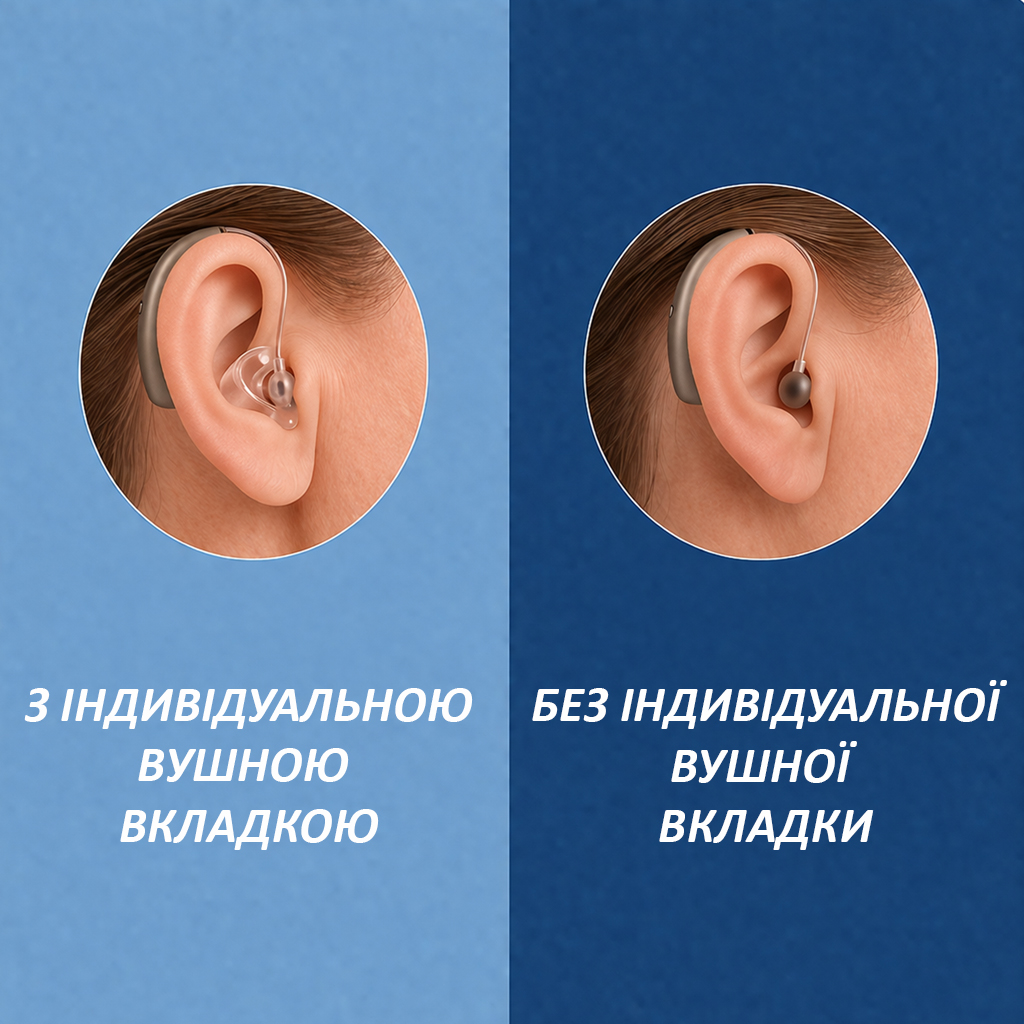
Can a hearing aid be used without an ear mold?
In which cases are hearing aids without an ear mold used?
The use of solutions without a traditional ear mold is becoming increasingly popular thanks to modern technologies. Such a hearing aid without an ear mold is most often used for mild to moderate hearing loss, when there is no need for tight sound sealing in the ear canal.
The most common option is open-fit hearing solutions, where sound is delivered through a thin tube or receiver without fully blocking the ear canal. This helps preserve the natural perception of surrounding sounds.
These devices are suitable for people diagnosed with mild hearing loss, especially in the high-frequency range. They enhance necessary frequencies without creating a “blocked ear” sensation.
Another popular option is an in-the-canal device, which is placed directly in the ear canal. It does not require a traditional ear mold but is custom-made to fit the user’s anatomy.
Such solutions are often chosen by users who value comfort and aesthetics. The absence of a bulky component makes the device less noticeable and more convenient for everyday use.
It is important to understand that not all cases allow the use of devices without an ear mold. In more severe hearing loss, a tighter fit is required for effective sound transmission.
Advantages and limitations of different designs
Modern types of hearing aids without ear molds offer several significant benefits, making them a popular choice for users of different ages.
Among the key advantages are:
- natural perception of environmental sounds;
- reduced occlusion (blocked ear) effect;
- comfort during long-term wear;
- discreet appearance.
However, there are also certain disadvantages of hearing aids that should be considered before purchase:
- limited amplification power;
- not suitable for severe hearing loss;
- risk of loss due to compact size;
- sensitivity to external factors.
Comparison of popular hearing aid designs
Different designs have their own features and are suitable for different situations. For example, open-fit models provide more natural sound but are less powerful.
In-the-canal solutions are more discreet but require precise manufacturing and regular maintenance. Their selection depends on the individual needs of the user.
Thus, when evaluating the advantages of hearing aids and their limitations, it is important to consider not only device characteristics but also the user’s lifestyle.
How to choose the right solution without losing sound quality
The correct choice of a hearing aid directly affects comfort and effectiveness of use. It is important to consider the degree of hearing loss and professional recommendations.
One of the key factors is sound quality, which should remain as natural as possible. Modern devices allow precise adjustment based on individual needs.
Professional hearing aid fitting is equally important, as even the best device will not perform well without proper calibration.
When choosing, it is worth considering the user’s lifestyle: activity level, work environment, and frequency of communication. This helps in selecting the optimal model.
Ease of use should also be taken into account — simple controls, maintenance, and compatibility with additional devices.
As a result, a well-informed approach allows you to gain maximum benefit from the device, maintain comfort, and ensure stable sound perception in any environment.