

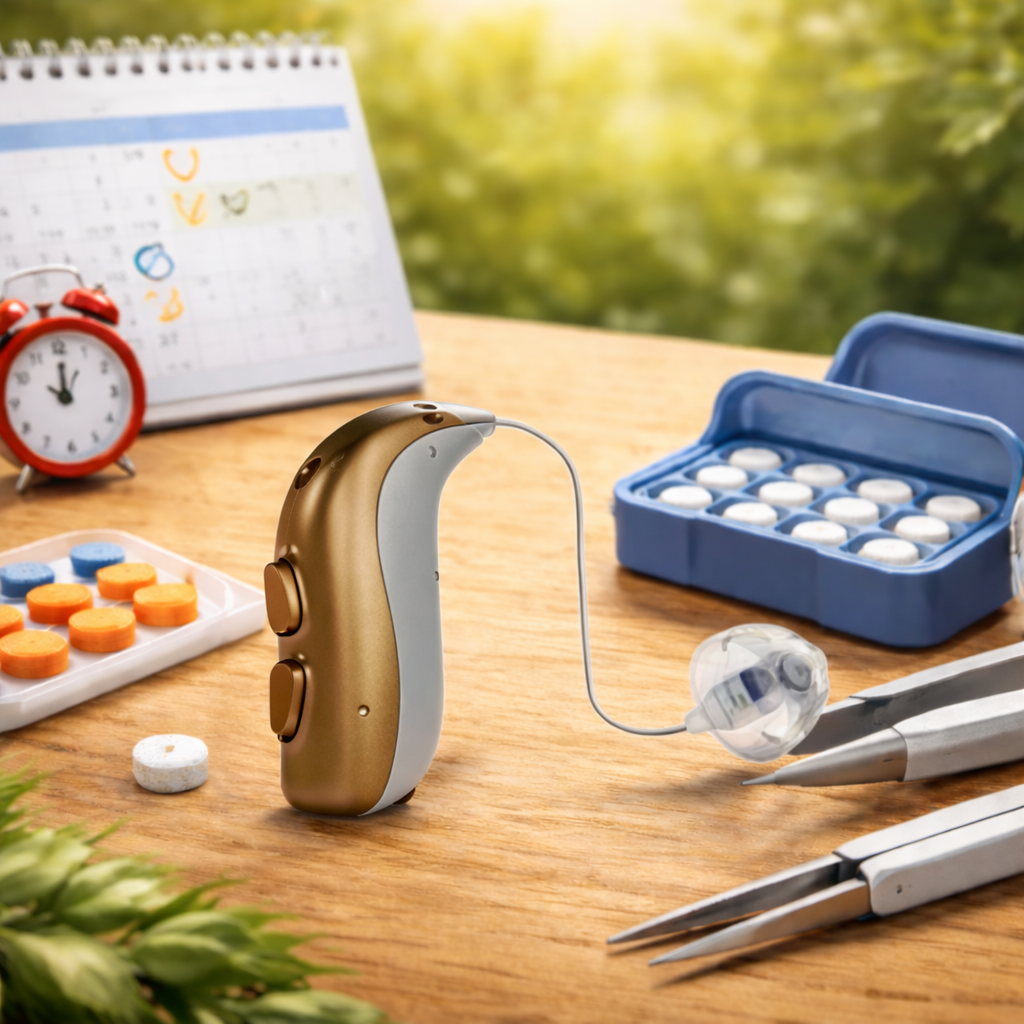
How often should you change the filters in a hearing aid?
What Determines the Replacement Interval of a Hearing Aid Filter
The frequency of filter replacement is directly related to the conditions in which the hearing aid is used. First of all, it depends on the individual level of earwax production: it varies from person to person, so the filter may become clogged faster or slower.
It is also important where and how the device is used. Dust, dirt, and moisture accelerate contamination, so with an active lifestyle the replacement interval is usually shorter. In clean indoor environments, the filter lasts longer.
The design of the device also plays a role. In-the-ear models require more frequent attention because they sit deeper in the ear canal and accumulate debris more quickly.
Regular care of the hearing aid helps monitor the condition of the filter. A simple daily check allows you to notice changes in time and avoid a decline in device performance.
Humidity and sweat also affect the filter’s condition. During intense physical activity or in hot weather, it may lose its properties faster.
On average, the filter should be replaced every one to four weeks, but it is better to rely not on fixed intervals but on its actual condition and sound quality.
Signs That the Filter Is Clogged and Needs Replacement
One of the first signs is a deterioration in sound quality. It becomes quieter, less clear, and there may be a feeling of muffled sound or discomfort while listening.
Another sign is poor audibility even when increasing the volume. This indicates that the wax filter is no longer performing its function and needs to be replaced.
During use, you may also notice other signs:
- the sound has become weaker for no apparent reason;
- interference or crackling appears;
- the device works inconsistently;
- hearing gradually worsens;
- visible contamination in the sound channel.
Additional Signs of Filter Contamination
Sometimes the filter becomes clogged gradually rather than suddenly. The user may get used to the decline in sound quality and not notice the problem for a long time.
During visual inspection, darkening or wax buildup is often visible. This is a clear signal that the filter needs to be replaced or additionally cleaned.
If such signs are ignored, the load on the device increases. Over time, this can affect not only the sound quality but also the lifespan of the hearing aid.
How to Properly Replace the Filter and Care for Your Hearing Aid
Replacing the filter is a simple procedure that can be done independently. Special tools or kits designed for a specific model are used for this purpose.
Before starting, it is important to turn off the device. This reduces the risk of damage and makes the process safer.
The old filter is carefully removed and replaced with a new one. It is important to install the element correctly, without misalignment, so it can fully perform its function.
Regular care of the hearing aid includes daily inspection and cleaning. This helps reduce the risk of contamination and maintain sound quality.
Cleaning should be done carefully, without moisture or aggressive substances. Only specialized accessories should be used.
If you follow these recommendations, the device will work reliably and for a long time. Regular filter replacement is the basis of proper use and comfortable hearing aid operation.