
How to tell if your hearing aid needs servicing?
Key signs of decreased performance of a hearing aid
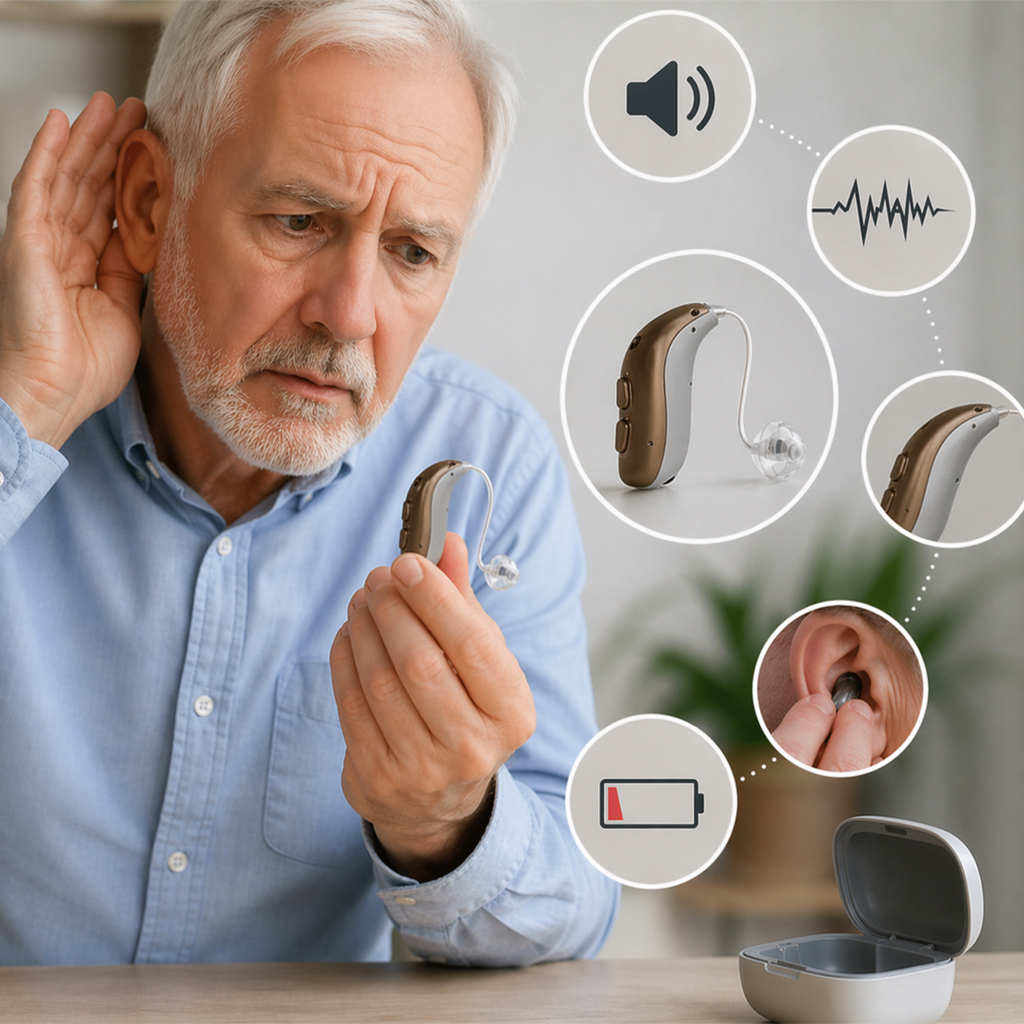
A hearing aid is designed to provide stable and accurate sound transmission, but over time its performance may decline. One of the first signs is reduced volume, even when the settings remain unchanged. Users may find themselves increasing the volume more often, yet still not achieving comfortable hearing.
Another common sign is poor audibility in familiar situations. If conversations that were once clear now require frequent repetition, this may indicate a malfunction or the need for a device check.
Sound distortion can also occur: speech becomes unclear, background noise appears, or an “echo” effect is noticeable. Such changes directly affect communication quality and everyday comfort.
It is also important to pay attention to unstable operation. If the device turns off unexpectedly, produces crackling sounds, or works intermittently, this may point to technical issues or the need for servicing.
A fast battery drain is another warning sign. If the battery used to last much longer but now requires frequent replacement, there may be battery problems or internal faults.
Additional signs may include physical discomfort while wearing the device. If the hearing aid no longer fits properly, causes irritation, or feels different, it is worth checking its condition and ensuring proper device adjustment.
Causes of sound quality deterioration and hearing aid malfunctions
One of the main reasons for reduced performance is device contamination. Dust, earwax, and moisture gradually accumulate inside the hearing aid, affecting the microphone and speaker. This directly impacts sound quality and can cause interruptions.
Another common cause is component wear. Even with careful use, internal parts gradually lose their efficiency, leading to decreased performance.
During operation, various factors can affect the device:
- moisture or condensation inside the device;
- mechanical damage to the корпус;
- improper storage;
- use of incompatible batteries;
- lack of regular maintenance.
External conditions can also worsen performance:
- sudden temperature changes;
- high humidity levels;
- prolonged use without cleaning;
- infrequent technical servicing.
Additional factors affecting hearing aid performance
Sometimes the issue is not only with the device but also with changes in the user’s hearing. In such cases, a hearing test is required to determine whether device parameters need adjustment.
Improper device adjustment can also lead to inefficient performance, even if the hearing aid itself is functioning properly. This is especially relevant when usage conditions change or after long-term use.
In some cases, users delay hearing aid repair, which only worsens the situation. Timely servicing helps prevent more serious failures and extends the lifespan of the device.
When professional servicing and diagnostics of a hearing aid are necessary
Regular maintenance is not just a recommendation but an essential part of using a hearing aid. Even without obvious issues, specialists recommend having the device checked at least once every six months.
You should consult a specialist as soon as the first signs of malfunction appear. This allows for quick identification and resolution of problems without significant time or cost.
If you notice a decline in sound quality or unstable performance, do not delay your visit. Timely diagnostics help maintain proper device function and everyday comfort.
Servicing is especially important after exposure to moisture or mechanical damage. Even if the device continues to work, internal components may have been affected, leading to future issues.
Professional maintenance includes cleaning, testing all components, and adjusting settings. If necessary, the device is fine-tuned according to the user’s current hearing condition.
Regular visits to specialists not only keep the device in good working condition but also help prevent serious breakdowns, ensuring consistent performance and reliable sound quality every day.