

Can You Use a Hearing Aid at the Beach?
How to Protect a Hearing Aid from Moisture and Sand at the Beach
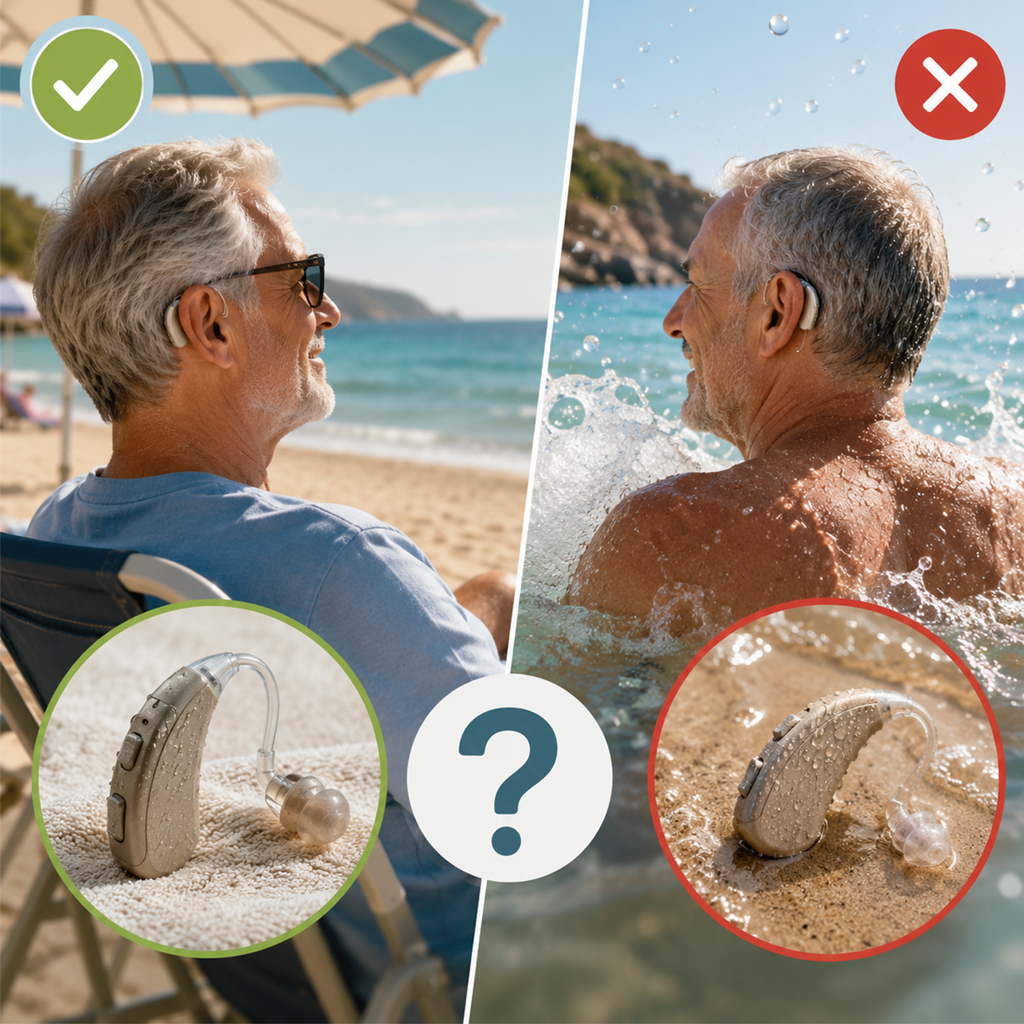
A beach vacation is not always safe for a hearing aid. High temperatures, seawater, and fine sand can negatively affect the device’s performance. That is why hearing aid protection during a trip to the sea should be planned in advance. Even short-term exposure to moisture can reduce sound quality.
Before going to the beach, it is recommended to check the condition of the housing and battery compartment. If the device has cracks or the cover does not close tightly, the risk of damage increases. Water getting inside the microphone or speaker is especially dangerous. After this, the device may begin to work intermittently.
Many users forget that moisture and sand can accumulate gradually. Sand particles enter the ventilation openings and interfere with normal sound transmission. Because of this, the hearing aid may whistle, crackle, or completely shut down. During active recreation, it is better to use a protective case or a special container.
You should not enter the sea or pool with a hearing aid unless the model has increased water resistance. Even moisture-resistant devices are not designed for complete immersion in water. It is also important to avoid direct sunlight because overheating negatively affects electronic components.
During отдых at the beach, it is useful to periodically wipe the device with a dry cloth. This helps remove traces of sweat and reduces the risk of contamination. If a person is actively moving, playing sports, or participating in beach games, the device should be additionally secured to prevent it from falling.
Proper care at the beach helps maintain stable hearing aid performance and avoid expensive repairs. The more carefully the user treats the device, the longer it will last without malfunctions or deterioration in sound quality.
What Risks Can Affect a Hearing Aid During a Vacation Near Water
The main problem at the beach is moisture getting inside the device. Seawater contains salt, which accelerates oxidation of contacts and internal components. Even a small amount of liquid can sometimes cause serious malfunctions.
Another risk is hearing aid damage caused by sand. Tiny particles get under control buttons, into the microphone, and into the battery compartment. Over time, this leads to poorer sound clarity and unwanted noise.
- overheating of the housing in the sun;
- microphone contamination with sand;
- oxidation of contacts;
- reduced sound quality;
- rapid battery drain;
- moisture damage to the speaker.
What Most Often Damages a Hearing Aid at the Sea
During a vacation near water, users often leave the device under direct sunlight. This leads to overheating of the plastic and deterioration of electronic components. Models with rechargeable batteries are considered especially sensitive because they tolerate high temperatures poorly.
Not only water but also humid sea air can be dangerous. Constant dampness gradually accumulates inside the housing. Because of this, microphone performance may become unstable and sound volume may decrease. If the device is not dried in time, it may completely stop working.
To reduce risks, it is recommended to follow simple rules:
- store the hearing aid in a dry container;
- do not leave the device in direct sunlight;
- clean the housing regularly;
- remove the device before swimming;
- use special drying systems.
How to Properly Care for a Hearing Aid After the Beach
After returning from the beach, the device should be inspected immediately. If traces of salt, sweat, or sand remain on the surface, they should be carefully removed with a soft dry cloth. It is not recommended to use wet wipes or alcohol solutions without specialist advice.
Special attention should be paid to the microphone openings and earmold. These are the places where dirt most often accumulates. Hearing aid cleaning should be done carefully, without strong pressure, so as not to damage sensitive parts.
If the device has been exposed to humid air, it is advisable to dry the hearing aid using a special container or moisture-removing capsules. This helps prevent internal corrosion and maintain stable device performance.
After a trip to the sea, it is recommended to check the sound quality. If crackling, noise, or reduced volume appears, it is better not to delay diagnostics. Timely maintenance helps avoid serious malfunctions and expensive repairs.
Regular post-beach care is especially important for people who wear hearing aids every day. Constant exposure to heat and moisture gradually affects the condition of the device. The sooner contamination is removed, the lower the risk of damage.
If the device starts working unstably after a vacation, it is worth contacting specialists. The Center of Hearing company provides inspection, maintenance, and professional cleaning of different types of hearing aids.