

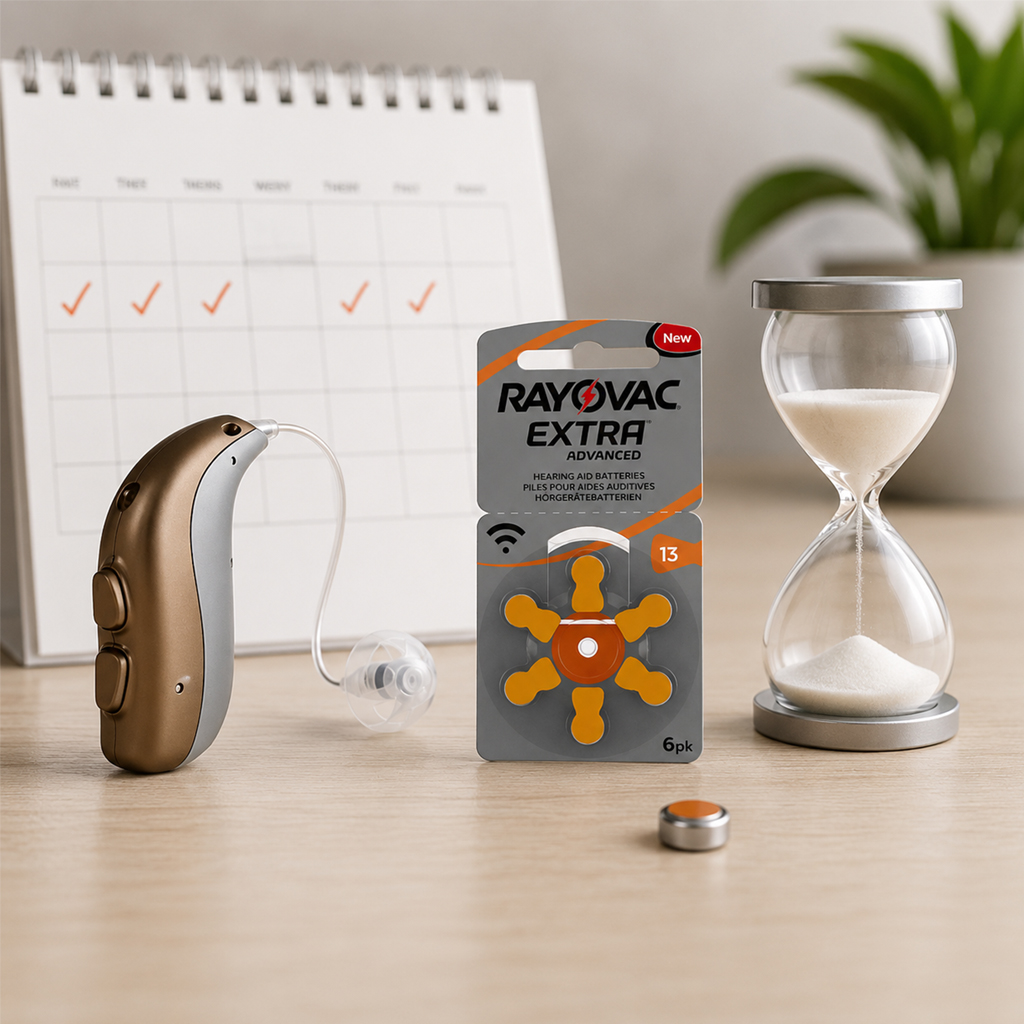
How Long Do Hearing Aid Batteries Last?
Rayovac Extra hearing aid batteries are widely recognized as one of the most popular zinc-air power sources for hearing aids. They provide stable device performance, maintain excellent sound quality throughout their service life, and are available in all standard sizes: 10, 312, 13, and 675.
However, even the highest-quality batteries do not all last the same amount of time. Their lifespan depends on the hearing aid model, daily usage time, sound amplification level, wireless features, and operating conditions. Let’s take a look at how long hearing aid batteries typically last and what you can do to extend their service life.
Quick Answer
On average, hearing aid batteries last:
- Size 10 — 3 to 7 days;
- Size 312 — 5 to 10 days;
- Size 13 — 6 to 14 days;
- Size 675 — 9 to 20 days.
The exact battery life depends on the hearing aid’s power, daily usage duration, and the use of additional features such as Bluetooth.
What Affects Hearing Aid Battery Life?
Even when using batteries from the same manufacturer, battery life may vary. This depends not only on the battery capacity but also on the characteristics of the hearing aid itself.
Modern digital hearing aids continuously process surrounding sounds, while Bluetooth-enabled devices consume additional power when streaming audio from a smartphone, TV, or other devices. The more powerful the hearing aid and the more intensively it is used, the faster the battery drains.
Battery storage conditions, ambient temperature, and battery quality are equally important. Rayovac Extra batteries provide stable voltage throughout their entire service life, allowing the hearing aid to operate without sudden drops in volume until the battery is completely discharged.
| Factor | Impact on Battery Life |
|---|---|
| Battery size | The larger the capacity, the longer the battery lasts. |
| Hearing aid power | More powerful devices consume more energy. |
| Bluetooth and wireless features | Increase battery consumption. |
| Daily usage time | The longer the hearing aid is used, the faster the battery drains. |
How Long Do Different Battery Sizes Last?
Hearing aids use four standard zinc-air battery sizes. Each size is designed for specific types of hearing aids and offers different battery capacity.
Size 10 Battery
Size 10 batteries feature yellow color coding and are most commonly used in the smallest in-the-canal hearing aids. Their average battery life ranges from 3 to 7 days.
Size 312 Battery
Size 312 batteries, identified by brown color coding, are among the most popular choices. Under normal use, they typically last between 5 and 10 days.
Size 13 Battery
Size 13 batteries have orange color coding and offer increased capacity, providing an average operating time of 6 to 14 days.
Size 675 Battery
Size 675 batteries, marked in blue, are designed for powerful behind-the-ear hearing aids. Their average service life ranges from 9 to 20 days.
| Battery Size | Color Code | Average Battery Life |
|---|---|---|
| 10 | Yellow | 3–7 days |
| 312 | Brown | 5–10 days |
| 13 | Orange | 6–14 days |
| 675 | Blue | 9–20 days |
These figures are average estimates. Heavy Bluetooth use or higher hearing aid power can shorten battery life. At the same time, high-quality batteries such as Rayovac Extra help deliver the maximum possible operating time when used according to the manufacturer’s recommendations.
How to Extend Hearing Aid Battery Life
You can extend the lifespan of your hearing aid batteries by following a few simple guidelines. After removing the protective tab, it is recommended to wait one to two minutes before inserting the battery into your hearing aid. During this time, the zinc-air battery becomes fully activated and will perform more efficiently.
After removing your hearing aid at night, it is advisable to leave the battery compartment open. This reduces unnecessary power consumption and helps remove moisture from the device. It is also important to clean your hearing aid regularly to remove earwax and debris, as clogged microphones and sound ports can increase power consumption.
Expert Tip. For everyday use, choose high-quality zinc-air batteries such as Rayovac Extra. They are compatible with most modern hearing aids, offer a long shelf life, and provide reliable performance almost until the battery is completely depleted.
When Should You Replace Hearing Aid Batteries?
Most modern hearing aids notify users when the battery charge is running low by emitting an audible signal or displaying a notification in a mobile app.
You can also tell it’s time to replace the battery by changes in the hearing aid’s performance. If the sound becomes quieter, the device starts switching off intermittently, or its operating time decreases significantly, the battery should be replaced. If the issue continues after installing a new battery, the problem may not be the battery itself but rather the hearing aid, which may require professional inspection.
Helpful Tips
To maximize battery life, store batteries at room temperature, do not remove the protective tab until you are ready to use them, and always use batteries before their expiration date. It is also recommended not to store new and used batteries together or expose them to excessive humidity.
If you wear your hearing aid every day, it is a good idea to always carry a spare set of Rayovac Extra batteries in the appropriate size. This will help prevent unexpected hearing aid shutdowns at home, at work, or while traveling.
Frequently Asked Questions
How long do hearing aid batteries usually last?
Depending on the battery size and operating conditions, they typically last from 3 to 20 days.
Why do hearing aid batteries sometimes drain faster?
Battery life is affected by the hearing aid’s power, Bluetooth usage, daily wearing time, and the quality of the batteries.
Can I extend the life of hearing aid batteries?
Yes. Proper storage, following the manufacturer’s recommendations, and using high-quality batteries will help you get the most out of every battery.
Should I leave the battery compartment open overnight?
Yes. Leaving the battery compartment open helps reduce power consumption and allows moisture to escape from the hearing aid.
Why do many users choose Rayovac Extra?
Rayovac Extra batteries are known for their reliable performance, long shelf life, excellent quality, and availability in all popular hearing aid battery sizes.
Conclusion
On average, hearing aid batteries last from a few days to two or three weeks. Their lifespan depends on the battery size, hearing aid model, and operating conditions.
Using high-quality Rayovac Extra batteries, storing them properly, and following the manufacturer’s recommendations will help ensure reliable hearing aid performance, maintain excellent sound quality, and maximize the life of every battery.