

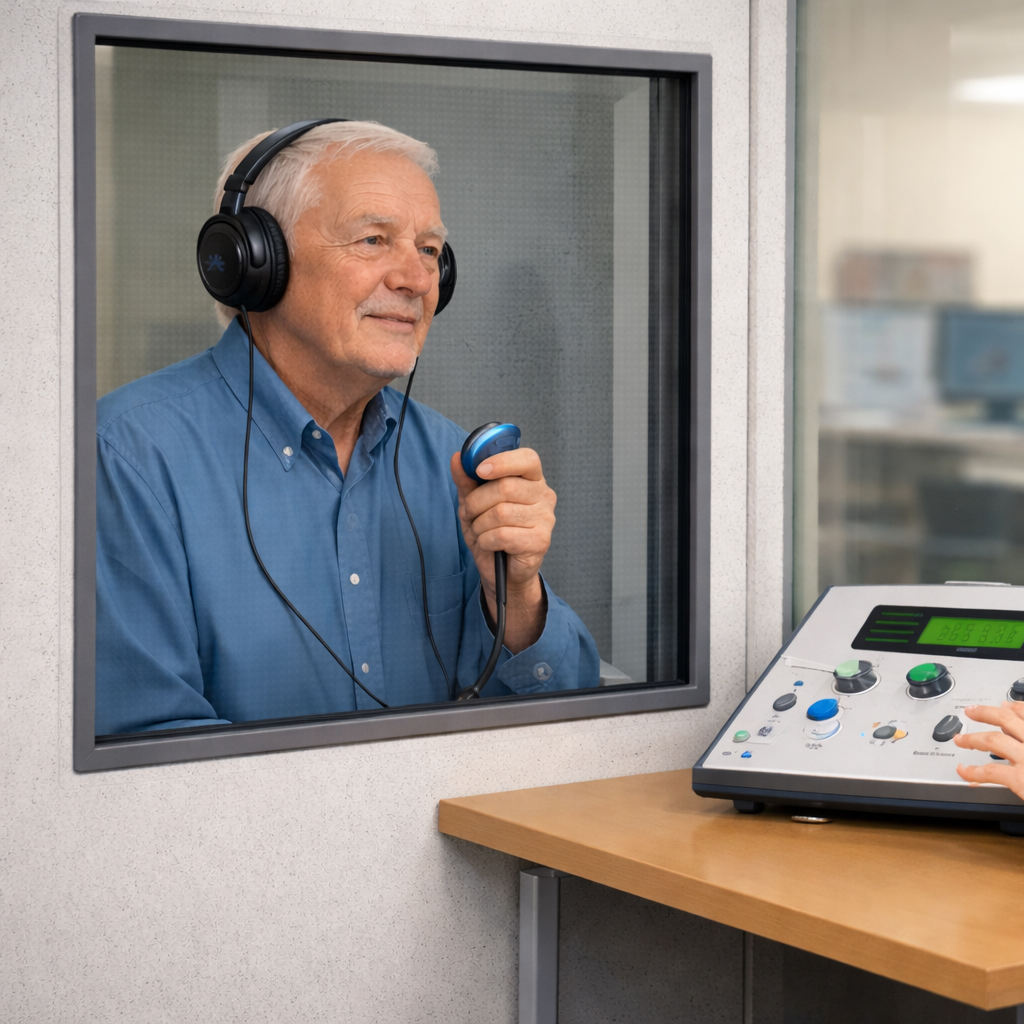
Audiometry for Elderly People: Features
When and Why Elderly People Need to Undergo Audiometry
With age, hearing function gradually changes, and many people do not immediately notice a decline in sound perception. Minor changes at first glance can affect communication quality, spatial orientation, and overall well-being.
Audiometry for elderly people makes it possible to objectively assess hearing condition and detect abnormalities at early stages. Regular hearing checks are especially important after the age of 60, even in the absence of obvious complaints, as age-related changes often develop gradually.
Timely hearing examination helps distinguish natural age-related processes from conditions that require medical intervention. This reduces the risk of social isolation and cognitive impairment.
In addition, early diagnosis of hearing loss simplifies further selection of correction and helps maintain a привычний level of activity and communication.
Features of Audiometry in Elderly Patients
The examination procedure for elderly patients requires a more attentive and individualized approach. The specialist takes into account the general state of health, the presence of chronic diseases, and the ability to perceive instructions.
The features of audiometry in older age are associated with possible fatigue and reduced concentration, therefore the examination is carried out in a calm environment and at a comfortable pace.
During hearing testing, it is important to consider the following points:
-
clear and understandable explanation of testing stages;
-
sufficient time to respond to sound signals;
-
the possibility to take breaks if necessary;
-
adjustment of signal volume and frequency.
Such an approach increases the accuracy of the examination and reduces stress for the patient.
Comfort and Accuracy of Hearing Examination in the Elderly
Additional attention is paid to the physical and emotional comfort of the patient. This directly affects the reliability of the obtained data and the overall impression of the procedure.
If necessary, the specialist may repeat certain stages of testing or change the format of signal presentation so that the audiometry results are as accurate as possible.
Modern hearing examination methods make it possible to take age-related characteristics into account and obtain precise information even in the presence of accompanying health conditions.
As a result, the patient receives not a formal diagnosis, but a comprehensive picture of the hearing system’s condition.
How Audiometry Results Are Interpreted and Next Steps
After the examination is completed, the specialist analyzes the obtained data and evaluates the degree and type of hearing impairment. Audiometry results make it possible to determine which frequencies are perceived most poorly.
Based on this data, hearing loss is diagnosed and classified as age-related, temporary, or pathological. This is an important stage for choosing the correct further management strategy.
The doctor explains the results to the patient in an accessible form, without complex medical terminology. This helps to better understand the condition and make an informed decision.
Further steps may include follow-up monitoring, preventive recommendations, or selection of hearing correction if necessary, helping to maintain a high quality of life.