

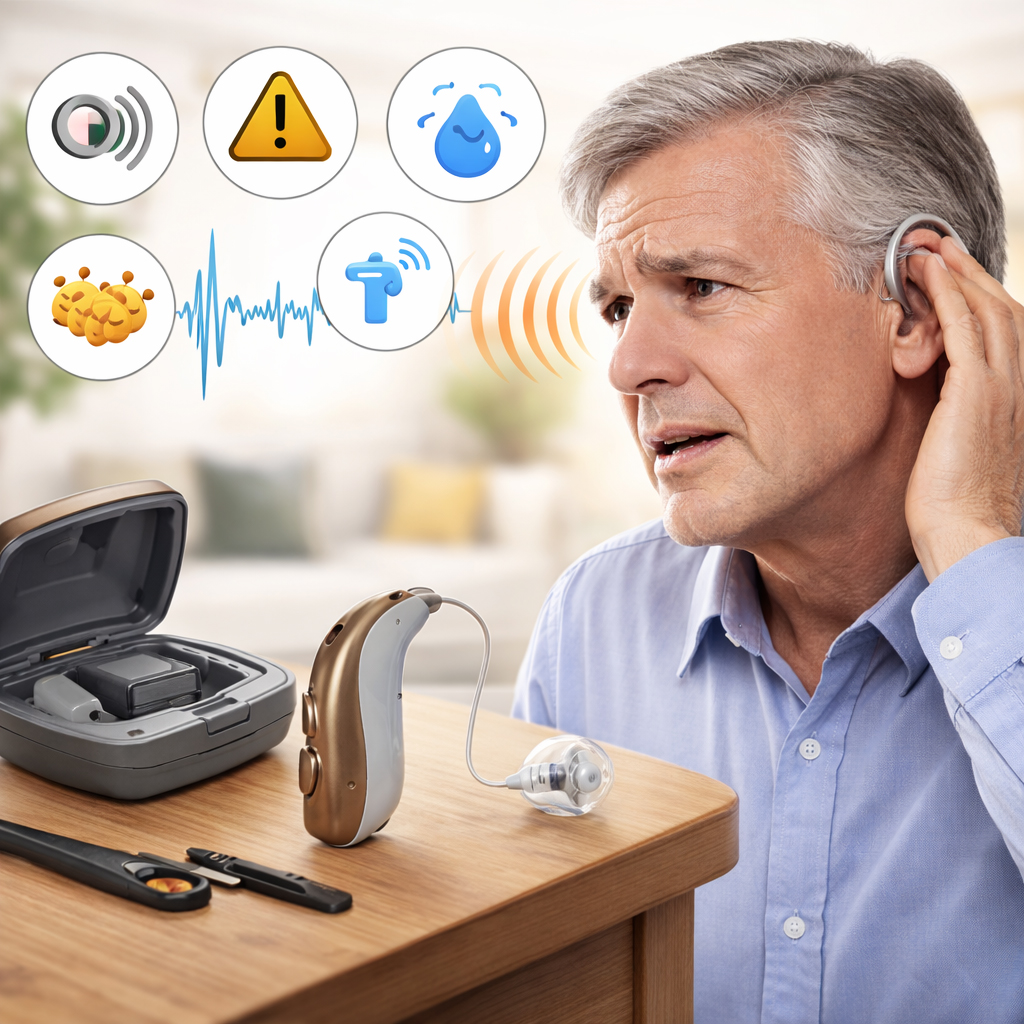
Why does a hearing aid crackle and make noise?
Main causes of crackling and unwanted noise in a hearing aid
Modern hearing aids are designed for accurate sound transmission and comfortable speech perception. However, users may sometimes notice unwanted sounds while the device is operating. Most often, crackling in a hearing aid appears due to technical factors, operating conditions, or improper use.
One of the most common causes is acoustic feedback. It occurs when amplified sound re-enters the microphone of the device. As a result, the user may hear whistling or noise from the hearing aid. This situation often occurs when the ear mold is installed incorrectly or when the device shifts in the ear.
Sometimes the source of the problem can be external factors. Electronic devices, strong radio signals, or other sources of electromagnetic waves may create interference in the hearing aid. This does not happen often, but under certain conditions it can temporarily affect sound quality.
Technical malfunctions should also not be excluded. Wear of components, damage to the microphone, or problems with the speaker may lead to unwanted sounds. In such cases, professional hearing aid adjustment or equipment diagnostics may be required.
How dirt, moisture, and improper fit affect sound quality
A hearing aid is used daily and constantly comes into contact with the skin, air, and various particles from the environment. Over time, earwax, dust, and micro-particles can accumulate inside the device. Hearing aid contamination gradually worsens sound transmission through the sound channels and filters. As a result, speech may become less clear and the volume may become unstable.
When sound outlet openings become partially blocked, the device starts working with increased load. This may cause distortion and reduce the clarity of speech transmission. Therefore, regular cleaning of the device and timely replacement of filters play an important role in maintaining stable hearing aid performance.
Another important factor is moisture in the hearing aid. Sweat, high humidity, or sudden temperature changes may lead to condensation forming inside the device. Even a small amount of moisture can affect sensitive electronic components and microphones.
When moisture accumulates inside the device, the sound may become intermittent, distorted, or unstable. That is why specialists recommend regularly drying the device and using special drying containers designed to remove moisture.
Why the correct fit of a hearing aid is so important
The correct fit of a hearing aid plays a key role in sound quality and overall comfort when using the device. If the device is placed incorrectly in the ear or if the ear mold is not the right size, small gaps may appear between the device and the ear canal walls. Through these gaps, part of the amplified sound escapes and re-enters the microphone, which may cause distortion and unstable sound.
In addition, the incorrect position of the device may reduce the effectiveness of sound amplification. When the hearing aid is not placed deep enough or constantly shifts during movement, the sound is transmitted unevenly. As a result, the user may find it more difficult to distinguish speech or surrounding sounds.
Comfort while wearing the device also directly depends on proper placement. If the hearing aid presses too tightly or, on the contrary, sits too loosely, a person may constantly adjust it in the ear. Such movements can temporarily affect the operation of the microphone and speaker, which influences sound stability.
To ensure proper device performance, several factors should be considered:
-
the ear mold must match the shape of the ear canal;
-
the device should be positioned correctly in the ear;
-
the hearing aid should remain stable during movement;
-
ear tips and filters should be checked regularly.
If the hearing aid fits correctly, the device operates more reliably and delivers the most natural sound possible. If discomfort, reduced sound quality, or frequent device movement occurs, it is recommended to consult a specialist who can check the fit and adjust the device settings if necessary.
What to do to eliminate interference and when professional adjustment is needed
If a user notices changes in the operation of the device, the first step is to perform a basic check. The hearing aid should be inspected to ensure the sound channels are clean and the battery is functioning properly. Sometimes even simple cleaning can quickly resolve the issue.
It is also important to carry out regular preventive maintenance. Over time, any electronic device requires inspection and adjustment. Periodic hearing aid adjustment helps maintain proper sound amplification and comfortable speech perception.
If unwanted sounds continue to appear, more detailed diagnostics may be necessary. In some cases, specialists detect internal damage or worn components that cannot be fixed independently.
When the device works unstably or constant sound distortions appear, hearing aid repair may be required. Consulting a specialist helps quickly determine the cause of the problem and restore normal device operation.