

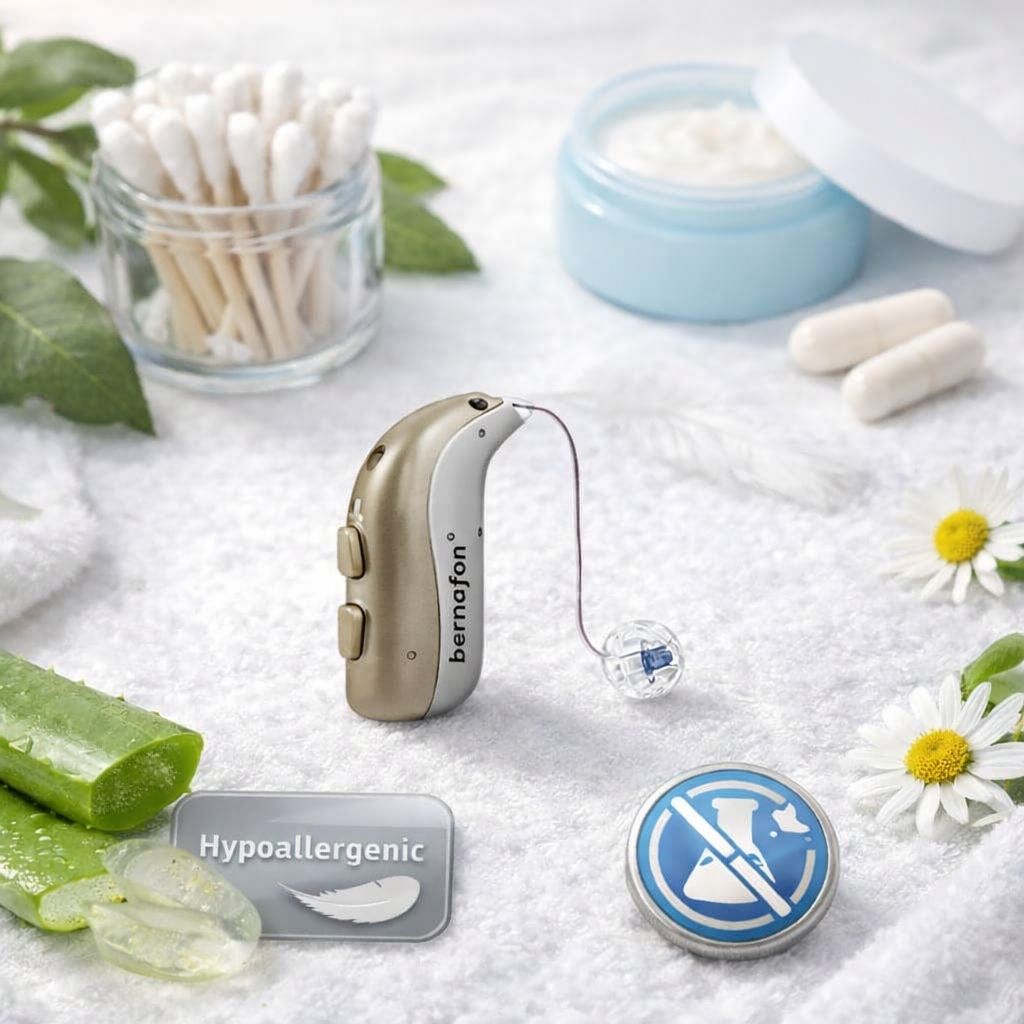
Which hearing aids are safe for people with allergies?
Which Hearing Aid Materials Are Safe for People with Allergies
For people with allergies, it is especially important to pay attention to the materials used in the housing and ear molds. Modern manufacturers use hypoallergenic materials that minimize the risk of skin reactions even during long-term use of the device.
Medical silicone is considered the safest option — it does not contain latex, does not absorb moisture, and does not react with the skin. Such ear molds are soft, elastic, and suitable for people with increased sensitivity of the ear canal skin.
New-generation medical polymers and acrylics are also widely used. They undergo dermatological testing and do not release harmful substances when in contact with the skin, making them a reliable solution for everyday use.
When choosing a hearing aid for allergy sufferers, it is important to check for safety certifications and the possibility of custom-made ear molds, which reduce pressure and the risk of micro-damage to the skin.
How to Choose a Hypoallergenic Hearing Aid Without the Risk of Irritation
The right choice begins with an assessment of individual skin characteristics and the ear canal. It is important to consider not only the material, but also the shape, ventilation, and fixation method of the device.
A high-quality, safe hearing aid should allow the skin to “breathe,” avoid creating a greenhouse effect, and not cause friction during movement. That is why consulting a specialist before purchasing is extremely important.
What to pay attention to when choosing:
-
materials of the housing and ear mold;
-
the possibility of individual fitting;
-
the presence of ventilation channels;
-
smoothness and quality of surface finishing;
-
manufacturer recommendations for sensitive skin.
These parameters directly affect comfort and the prevention of irritation during daily use.
Hearing Aid Fitting for Sensitive Skin
Professional hearing aid fitting helps avoid mistakes that often lead to discomfort. A specialist evaluates not only the degree of hearing loss, but also the tendency to allergic reactions.
In centers such as the Center of Hearing, modern diagnostic methods and individualized solutions are used for people with sensitive skin.
A properly selected model reduces friction, improves ventilation, and makes wearing the device as comfortable as possible even during prolonged use.
Recommendations for Hearing Aid Care for People with Allergies
Regular hearing aid care plays a key role in preventing skin reactions. Dirt and moisture can cause irritation even when high-quality materials are used.
Daily cleaning of the ear mold with a soft cloth and special products helps remove skin secretions and dust. It is important to avoid aggressive cleaning agents and alcohol.
Storing the device in a dry container with a moisture absorber reduces the risk of bacterial growth and extends the lifespan of the hearing aid.
It is also recommended to periodically show the device to a specialist for professional cleaning and inspection of the ear mold condition — this is an effective way to maintain comfort and skin health.