

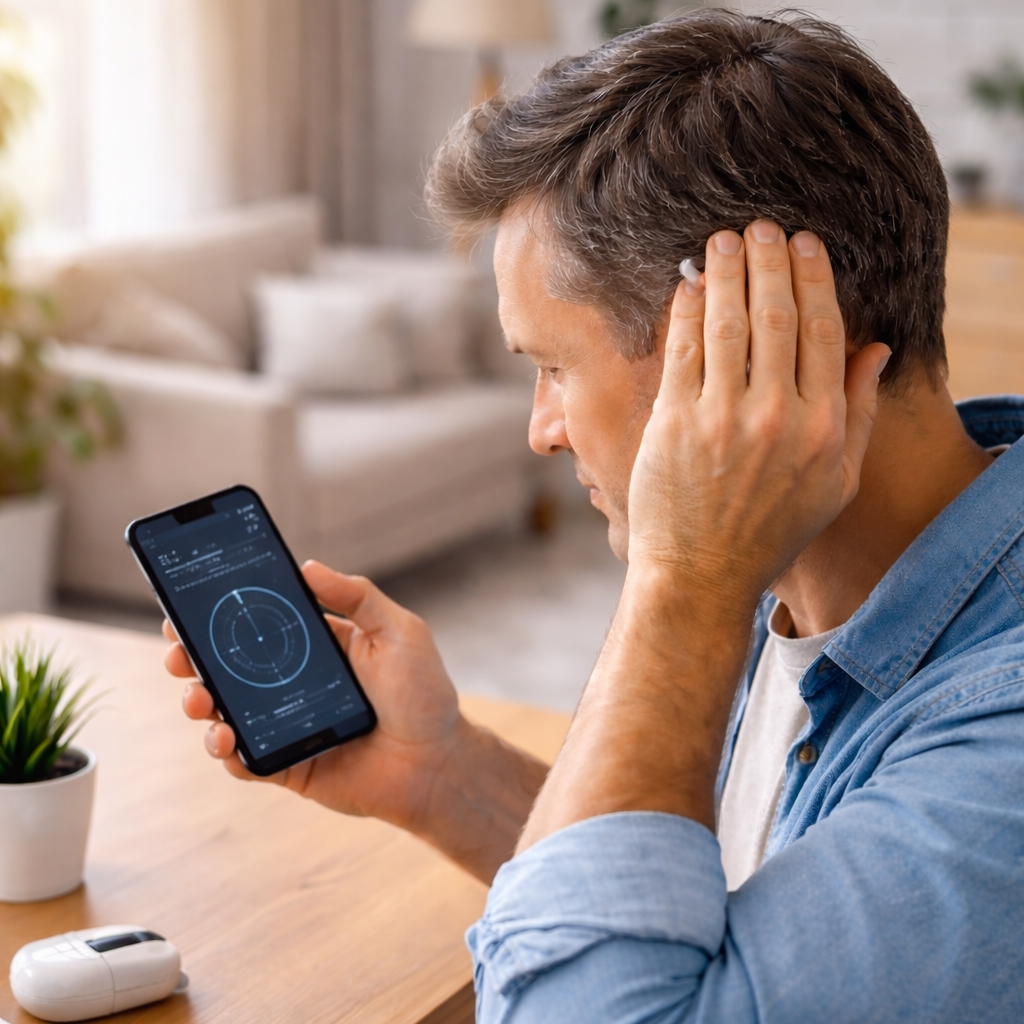
Self-adjustment of a hearing aid: is it possible?
Which Hearing Aid Parameters Require Professional Adjustment
Modern hearing devices are complex digital systems in which not only power matters, but also individual adaptation to the user. Hearing aid adjustment includes fine-tuning frequencies, compression levels, and microphone sensitivity. These parameters depend on the degree of hearing loss and the individual characteristics of speech perception.
One of the key stages is determining the precise hearing loss profile. For this purpose, hearing audiometry is conducted, based on which a specialist sets the sound amplification parameters across different frequencies. Without objective data, it is impossible to properly distribute the load on the auditory system.
A professional also performs device programming according to the patient’s lifestyle: communication in noisy environments, watching television, or phone conversations. Separate programs are created that automatically switch depending on the environment.
It is important to consider individual sensitivity to loud sounds. Excessive power may cause discomfort and even lead to overload of the auditory nerve. Therefore, only a specialist can ensure safe and accurate device adjustment without the risk of complications.
Risks and Limitations of Self-Adjusting a Hearing Aid
Many users wonder whether self-adjustment is possible. Some models do allow volume changes or mode selection. However, full self-adjustment without proper diagnostics often leads to errors.
Incorrect adjustment can cause not only discomfort but also gradual hearing deterioration due to excessive strain.
The main risks include:
-
distortion of speech perception;
-
increased background noise;
-
whistling and feedback;
-
increased fatigue;
-
irritation of the ear canal.
In addition, users do not have access to objective indicators used to calculate sound amplification parameters. Adjustments made “by ear” are often subjective and do not reflect the actual needs of the auditory system.
Why Home Adjustment Cannot Replace Professional Fitting
Home applications allow changes to basic functions but do not provide a comprehensive hearing analysis. Without hearing audiometry results, it is impossible to determine which frequencies require amplification and which need limitation.
There is also no safety control. A person may increase the volume based on the feeling that it is “too quiet,” without considering hidden overload. This creates a risk of gradual damage to auditory structures.
Finally, complex speech processing and noise reduction algorithms can only be properly adjusted through professional intervention. Comprehensive hearing aid adjustment requires equipment and experience that only a specialist possesses.
When to Consult a Specialist for Accurate Adjustment
A visit to a doctor is necessary if discomfort, whistling, or reduced speech clarity appears. These are signs that re-adjustment is needed. In such cases, consultation with an audiologist is essential.
A specialist should also be consulted after health changes such as otitis, blood pressure fluctuations, or prolonged nasal congestion. These factors can temporarily alter sound perception and require proper device adaptation.
If the device is new, the initial precise adjustment is carried out in stages. During the first weeks, additional visits may be necessary to refine parameters and help the auditory system adapt to amplification.
Professional support ensures long-term comfort and device effectiveness. Independent adjustments are acceptable only within user-controlled modes, while comprehensive hearing aid fitting should always be performed by a specialist.