

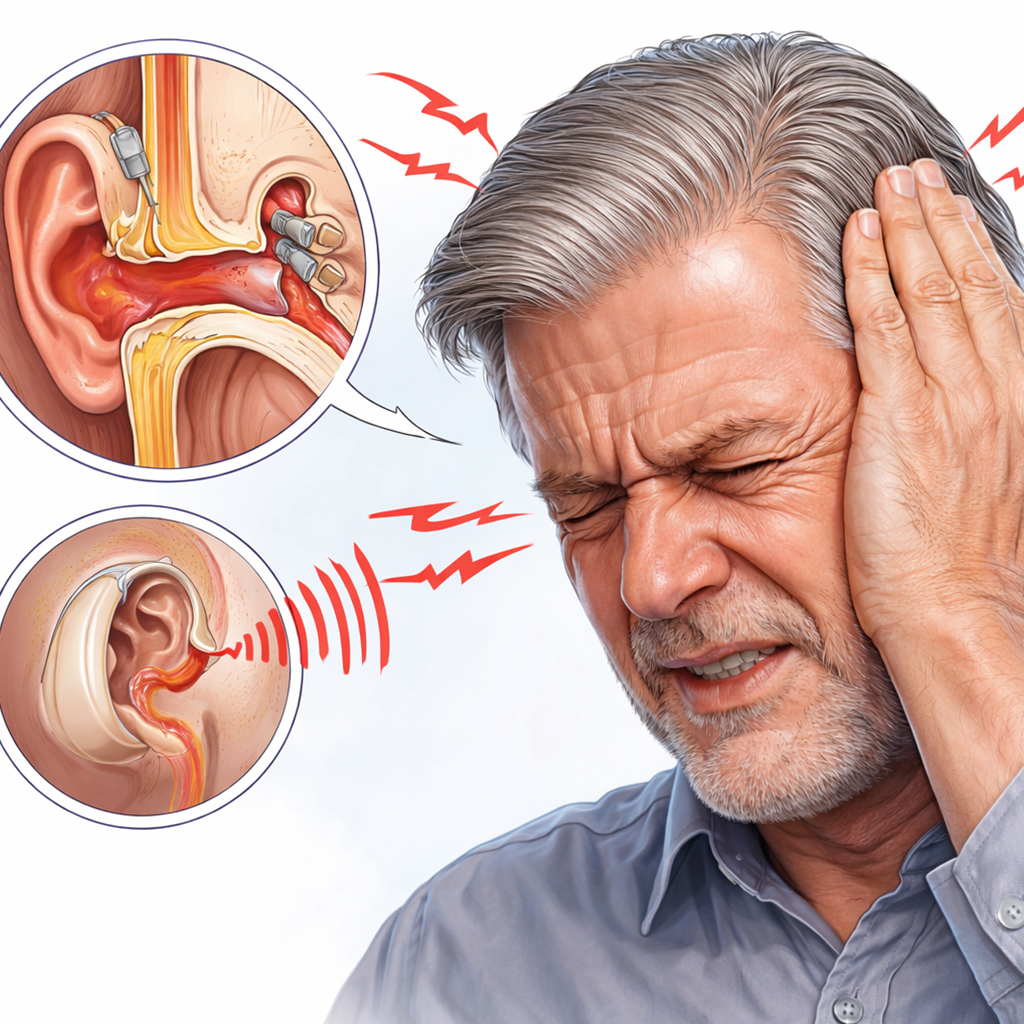
Why Can a Hearing Aid Cause Headaches?
Incorrect Hearing Aid Adjustment and Excessive Sound Amplification
Headaches when using a hearing aid are often associated with incorrect device settings. If the hearing aid adjustment is performed without considering the audiogram and individual sensitivity, the sound flow becomes too intense. The brain receives an unfamiliar volume of signals and responds with tension.
Excessive sound amplification is especially noticeable in noisy environments. The user begins to distinguish the smallest details they were previously unaccustomed to. This creates constant strain on the auditory system, leading to fatigue, irritability, and pain in the temple area.
Another possible cause is programming errors during the initial activation of the device. Incorrectly set frequencies, overly high compression, or an aggressive adaptive noise reduction system can provoke sensory overload. As a result, persistent discomfort while wearing the hearing aid may develop.
To avoid such consequences, it is important to carry out follow-up checks and parameter adjustments. Regular monitoring by a specialist helps gradually reduce the strain and ensure comfortable hearing aid performance without negative sensations.
Adaptation Period to a Hearing Aid and Auditory Center Overload
Even with correct settings, the device may cause unpleasant sensations during the first weeks. Adapting to a new level of sound takes time. A person who has lived with hearing loss for a long period encounters an unfamiliar acoustic environment.
During this stage, overload of the auditory center is possible, as the brain begins to actively process restored sound signals. The process of adjustment occurs gradually and may be accompanied by temporary fatigue.
The main factors affecting well-being during the adaptation period include:
-
a sudden increase in daily wearing time;
-
high volume levels at the beginning of use;
-
lack of gradual parameter correction;
-
prolonged exposure to noisy environments.
How Adaptation to a Hearing Aid Occurs
Proper adaptation involves gradually increasing the duration of use. In the first days, it is recommended to wear the device for several hours and then add time each day. This approach reduces the risk of headaches.
It is also important to visit a specialist regularly to monitor the body’s response. Fine-tuning the settings helps reduce tension and stabilize sound perception.
With proper support, the user moves through the adjustment stage more quickly, and the hearing aid begins to feel natural, without pronounced discomfort.
Anatomical Discomfort When Wearing a Hearing Aid and Fitting Errors
Physical factors also play a significant role. Incorrect hearing aid selection may lead to mechanical pressure on ear tissues, especially when using in-the-ear models.
If the device causes pressure in the ear canal, blood circulation may be affected and local tension can occur. This may result in pain radiating to the head. A custom earmold made without considering anatomical features can worsen the problem.
In addition, an overly tight fit or an unsuitable housing size may cause microtrauma and skin irritation. Over time, these factors intensify unpleasant sensations and contribute to persistent pain.
The solution lies in accurate diagnostics and professional fitting. The Hearing Center company offers a comprehensive approach, including checking the fit and adjusting the earmold shape. This helps eliminate anatomical causes and ensures stable comfort when using a hearing aid.