

Why Has the Hearing Aid Become Quieter?
Main Causes of Reduced Hearing Aid Volume
A decrease in volume can occur gradually or suddenly. In most cases, the issue is not a serious malfunction but the result of normal daily use. Even with careful handling, a hearing aid requires regular maintenance and monitoring of its components.
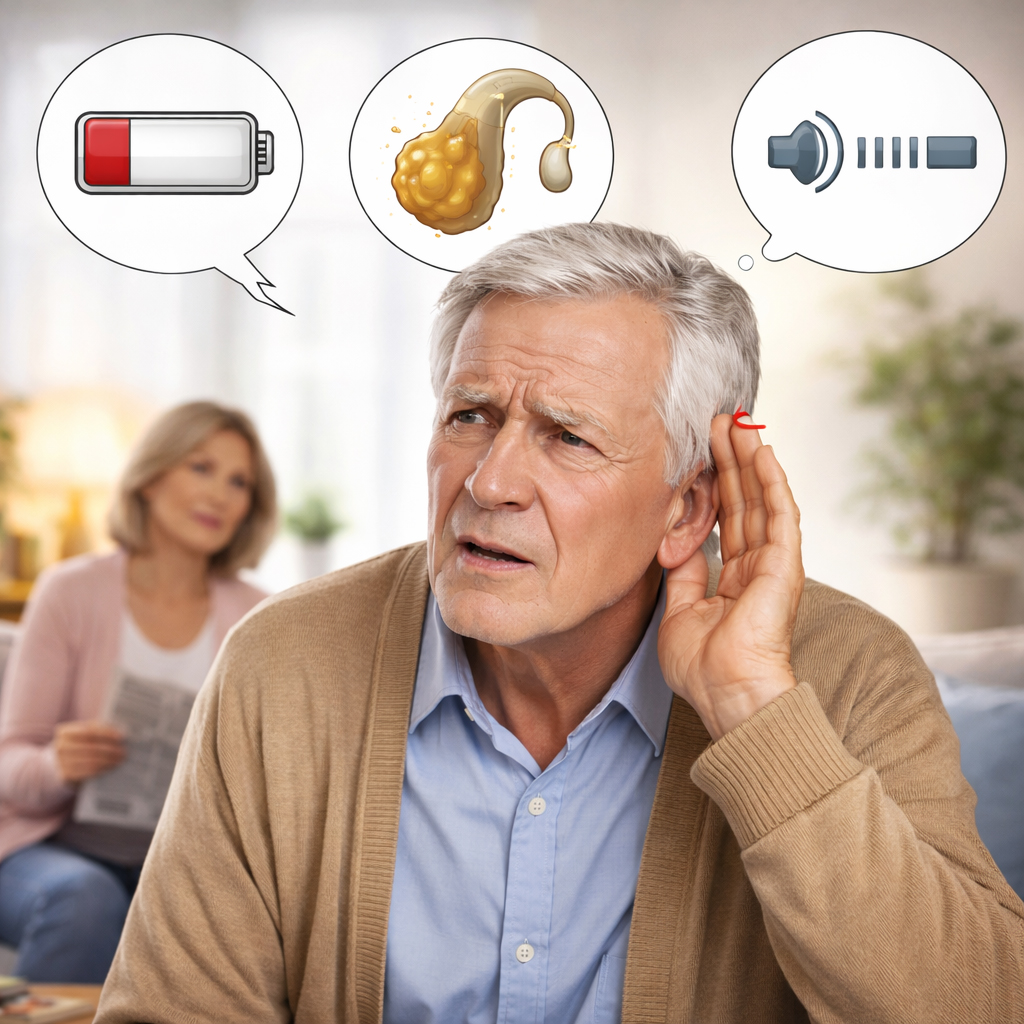
One common cause is blockage of the sound channel. Dust, debris, and earwax can reduce sound transmission, making the signal weaker or distorted. In some models, earwax may also accumulate in the receiver, directly affecting overall loudness.
Another frequent reason is a low battery. When the battery charge is close to depletion, the device may continue to function but produce quieter sound. In rarer cases, a microphone malfunction can reduce the clarity and intensity of incoming sounds.
It is also important to consider possible changes in the user’s hearing. Sometimes the device seems quieter simply because updated hearing thresholds require proper hearing aid adjustment.
Hearing Aid Diagnostics and User Actions
Before contacting a service center, it is advisable to perform a basic hearing aid check. Simple steps can help identify the cause and restore normal volume without professional intervention.
At home, it is essential to clean the device and assess the condition of its power source. Regular maintenance often resolves minor sound issues quickly.
How to Check Your Hearing Aid at Home
During inspection, pay attention to the following:
-
condition of the sound outlet and filters;
-
presence of dirt or moisture;
-
correct battery placement;
-
integrity of the housing and tubing.
If dirt is present, carefully perform hearing aid cleaning using recommended tools. If a low battery is suspected, complete a battery replacement and ensure it is inserted correctly.
Also review the volume settings and listening programs. Sometimes reduced sound levels are caused by accidental mode changes or incorrect adjustments.
When a Hearing Aid Requires Professional Adjustment or Repair
If volume does not improve after basic steps, professional diagnostics are necessary. A specialist can perform a detailed hearing aid check using specialized equipment to determine the technical condition of the device.
Warning signs include distorted sound, unusual noise, intermittent operation, or lack of amplification. In such cases, professional hearing aid adjustment based on updated hearing test results may be required.
If technical defects are identified, hearing aid repair may be needed. This can involve replacing internal components such as the microphone or receiver. Timely service helps prevent more serious damage.
Regular maintenance extends the lifespan of the device and ensures stable performance. Scheduled hearing aid adjustment supports clear speech perception and comfortable everyday listening.