
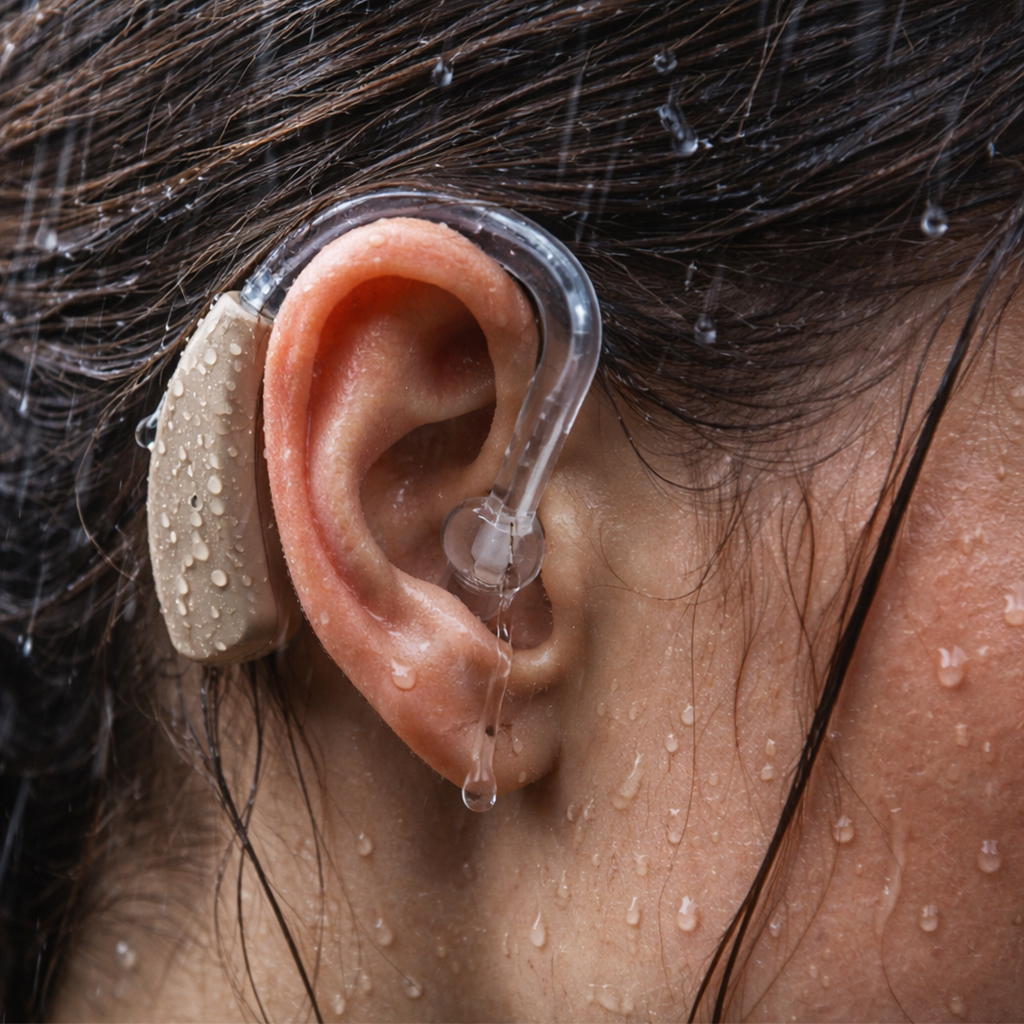
Is it safe to wear a hearing aid in the rain?
How moisture affects hearing aid performance
Wearing a hearing aid in the rain is acceptable, but only for short periods and with proper precautions. Most modern devices have basic moisture protection, but they are not fully waterproof. That’s why it’s important to understand the risks associated with water exposure.
The influence of moisture primarily affects sound quality. When water enters the microphone or sound outlet, the audio may become muffled, distorted, or intermittent. This happens because moisture physically blocks or disrupts sound transmission.
Internal electronic components are also at risk. Even a small amount of moisture can cause corrosion of contacts and disrupt microcircuits. These processes may not be immediately noticeable but can lead to unstable performance over time.
Another hidden risk is condensation. When moving from a warm indoor environment to a cold, rainy outdoor setting, moisture can form inside the device. This buildup increases the negative impact and shortens the lifespan of the hearing aid.
If you frequently use a hearing aid in the rain without protection, the likelihood of damage increases and may eventually require hearing aid repair. Proper care after exposure to moisture is essential.
Ways to protect a hearing aid from rain and humidity
To safely use a hearing aid in rainy conditions, it’s important to take preventive measures. Even simple steps can significantly reduce the risk of water entering the device and help maintain its performance.
In everyday situations, you should consider weather conditions and adjust how you use your device. If rain is expected, it’s best to prepare in advance and limit direct exposure to moisture.
-
wear a hood, hat, or use an umbrella
-
use protective covers or moisture shields
-
avoid prolonged exposure to heavy rain
-
remove the device during strong rainfall
-
store the hearing aid in a dry, sealed case
These steps provide basic protection from moisture and are suitable for daily use.
You can also adapt your approach depending on your lifestyle and environment. Frequent outdoor activity or humid climates require more attention to protection.
Additional hearing aid protection methods
For users regularly exposed to moisture, additional care solutions are recommended. Drying containers and moisture-absorbing capsules are effective tools for removing humidity after daily use.
Regular maintenance is also important. If you notice reduced volume, distortion, or noise, it may indicate internal moisture buildup.
Additional measures include:
-
using a drying box overnight
-
replacing filters and protective components regularly
-
storing the device in a dry place
-
scheduling preventive maintenance
Comprehensive protection of a hearing aid involves proper use, storage, and routine care. This approach helps extend the lifespan and maintain sound quality.
What to do if a hearing aid gets wet and how to dry it properly
If a hearing aid gets wet, it’s important to act quickly and correctly. Improper handling can worsen the situation and lead to serious damage.
First, turn off the device immediately. Then remove the battery or disconnect the power source to prevent short circuits and internal damage.
Next, gently wipe off any visible moisture using a soft, dry cloth. Avoid pressing on the device or attempting to disassemble it.
Step-by-step actions:
-
turn off the hearing aid
-
remove the battery
-
wipe the exterior dry
-
place the device in a dry, ventilated area
Do not use a hair dryer, heater, or any direct heat source. High temperatures can deform the casing and damage internal components.
Drying hearing aids should be done naturally or with specialized drying containers. These tools safely remove residual moisture and are ideal for regular use.
If the sound remains distorted or the device does not function properly after drying, this may indicate internal damage. In such cases, professional hearing aid repair is required.
Taking timely action and maintaining proper care can minimize damage and help preserve the functionality of your hearing aid even after moisture exposure.