

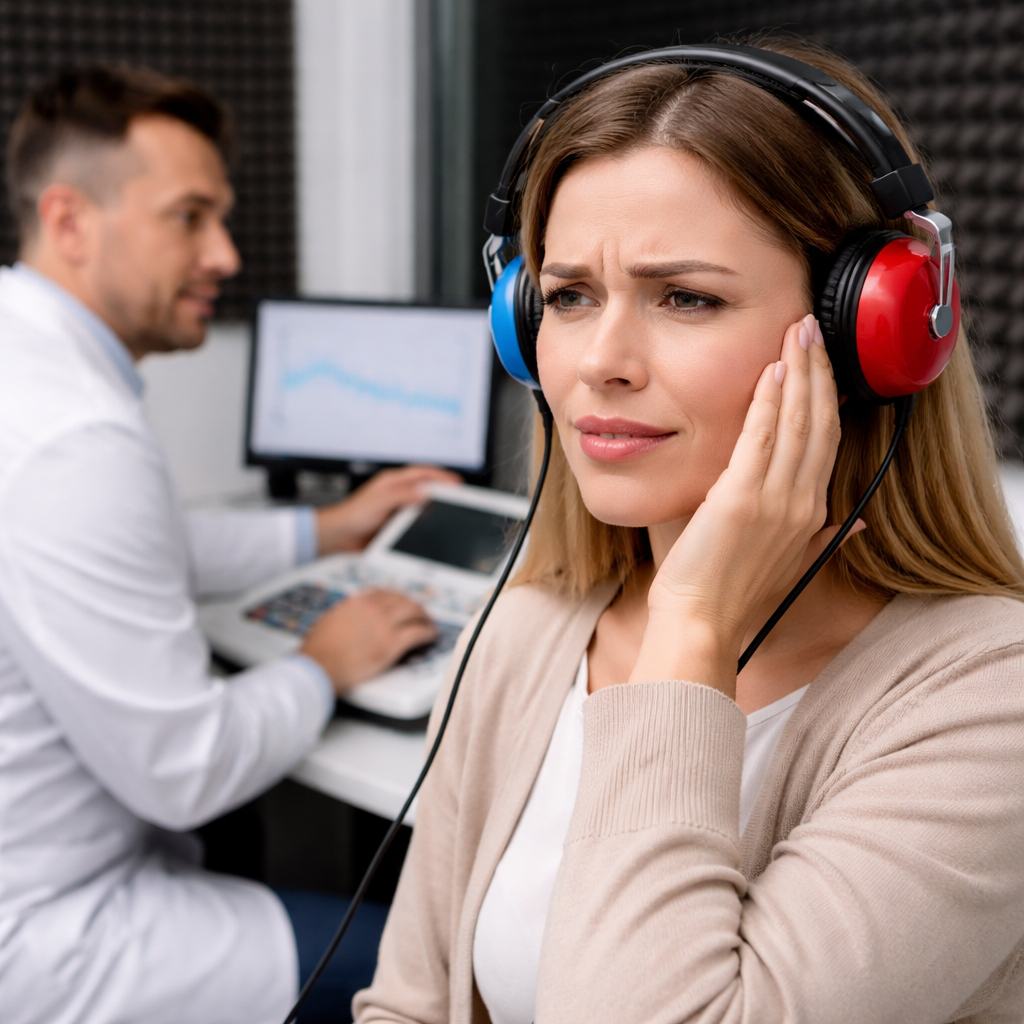
Audiometry for hearing loss in one ear
When Audiometry Is Needed for Unilateral Hearing Loss
Unilateral hearing loss often develops gradually, so a person may not notice the problem for a long time. If sounds become less clear on only one side, this is already a reason to consult a specialist and undergo an examination.
The most common symptoms include difficulty understanding speech in noisy environments, a feeling of ear fullness, and the need to ask others to repeat themselves. In such cases, audiometry of one ear helps accurately determine the level of impairment.
Among the factors that can trigger the issue are injuries, infections, age-related changes, and other causes of hearing loss. The earlier the deviation is detected, the higher the chances of preventing its progression.
Diagnostics are also necessary when there is noise or ringing in one ear. These signs may indicate hidden disorders that cannot be identified without specialized testing.
If you live in the capital, it is advisable to undergo a timely hearing test in Kyiv to receive an accurate assessment of your hearing function and professional recommendations.
Contacting a specialized clinic, such as the Hearing Center company, allows not only to detect the problem but also to receive a clear plan for further actions.
How Audiometry Is Performed and What Methods Are Used
Audiometry is a modern method of hearing diagnostics that allows determining sensitivity to different frequencies and sounds. The procedure is painless and takes minimal time.
During the examination, the patient stays in a soundproof booth and responds to audio signals. This ensures accurate data about the condition of the auditory system.
Main methods used by specialists:
- tonal audiometry — determines hearing thresholds at different frequencies
- speech audiometry — evaluates speech recognition ability
- additional tests — help уточнить характер нарушения
Additional Features of the Examination
Before the procedure, the doctor conducts a consultation and rules out possible contraindications. This is important for obtaining accurate results and making a precise diagnosis.
During the examination, professional equipment is used to detect even minimal hearing deviations. This makes the test highly informative.
A comprehensive approach allows identifying not only the degree of impairment but also its possible causes. This helps the doctor choose the optimal correction strategy.
Audiometry Results and Further Recommendations
After the examination, the patient receives a chart displaying hearing indicators. Proper interpretation of the audiogram helps determine the nature and severity of the disorder.
Based on the data, the specialist determines the degree of hearing loss and evaluates how much the auditory function is reduced. This is a key step in choosing further treatment.
Depending on the results, different options may be recommended. These can include medication, monitoring, or more comprehensive hearing loss treatment.
If the impairment is significant, the specialist may recommend hearing aids or other correction methods. The selection is always индивидуальный.
Patients also receive recommendations for preventing further hearing deterioration. This includes controlling auditory нагрузку and attending regular check-ups.
Regular examinations help monitor changes over time and adjust treatment if necessary, ensuring the best possible preservation of hearing.