

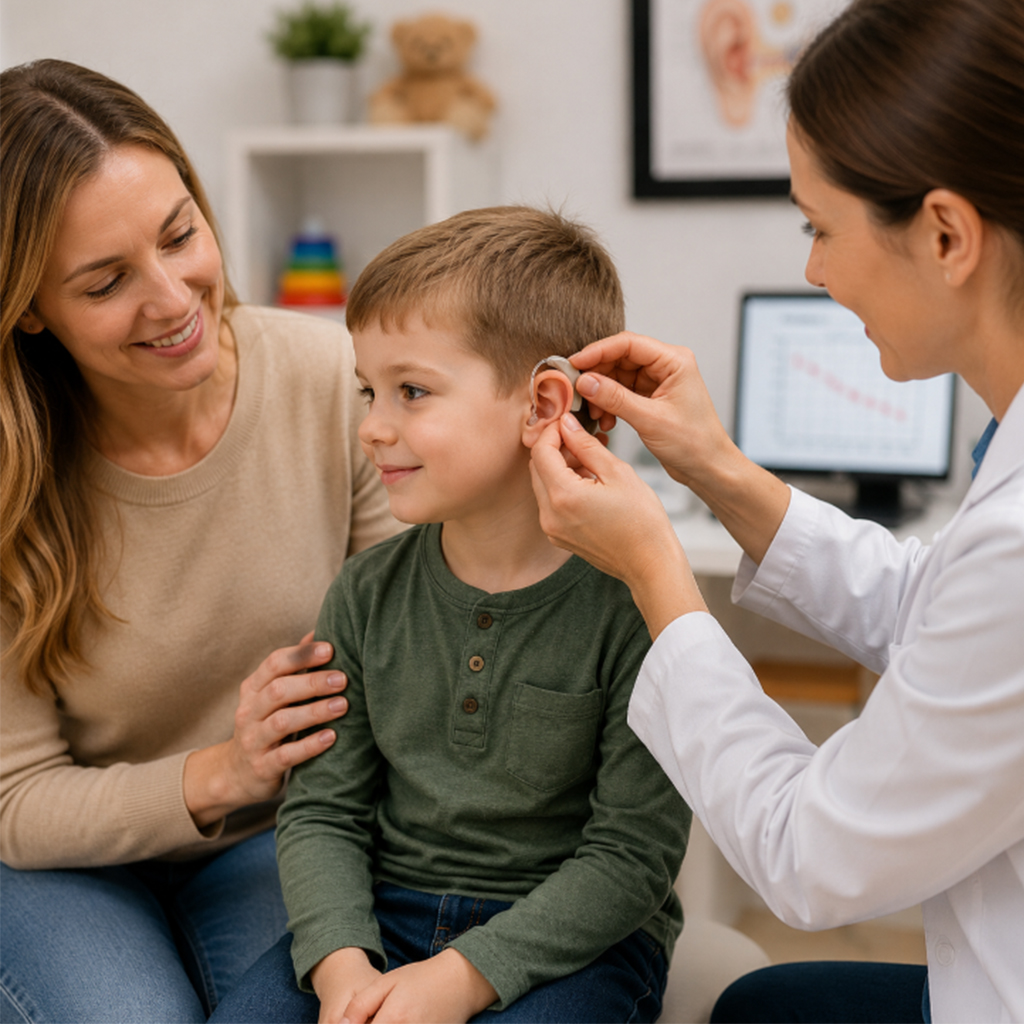
Features of Choosing a Hearing Aid for a Child
Choosing a hearing aid for a child requires an individual approach, as hearing plays a vital role in speech development, learning, and communication during childhood. Modern hearing aids help compensate for hearing loss, but their effectiveness largely depends on proper selection and professional fitting.
Quick Answer
When choosing a hearing aid for a child, it is important to consider:
- the degree of hearing loss;
- the child’s age;
- hearing assessment results;
- the possibility of individual adjustment;
- comfort for everyday use;
- recommendations from an audiologist.
Why It Is Important to Choose the Right Hearing Aid for a Child
A properly selected hearing aid helps a child understand speech more clearly, develop communication skills faster, and feel more confident in everyday life. The earlier hearing correction begins, the greater the opportunities for full speech and language development.
| Benefit of Proper Selection | Value for the Child |
|---|---|
| Improved speech perception | Easier communication |
| Better hearing development | Improved speech skills |
| Comfortable daily wear | Faster adaptation |
| Individual programming | Maximum effectiveness |
What Factors Affect the Choice
Degree of Hearing Loss
The power and technical capabilities of the hearing aid are selected according to the results of the hearing evaluation.
Child’s Age
As the child grows, the size of the earmold and the device settings may need to be adjusted.
Individual Needs
The child’s lifestyle, activity level, and hearing characteristics should also be taken into account.
Which Hearing Aids Are Suitable for Children
Behind-the-ear (BTE) hearing aids are most commonly recommended for children. They are reliable, allow easy replacement of the earmold as the child grows, and are suitable for different degrees of hearing loss.
| Device Type | Features |
|---|---|
| Behind-the-ear hearing aid | Suitable for most children |
| Custom earmold | Secure fit and comfortable wear |
| Digital hearing aid | Precise fitting and excellent sound quality |
Which Features Make Hearing Aids More Comfortable to Use
Modern hearing aids include technologies that help children hear surrounding sounds more naturally and comfortably.
- automatic volume adjustment;
- noise reduction;
- directional microphones;
- moisture protection;
- Bluetooth connectivity;
- multiple listening programs.
Expert Tip. For children, it is best to choose hearing aids with flexible programming options. This allows the device to be adjusted as the child grows and their hearing needs change.
How a Child Adapts to a Hearing Aid
Getting used to a hearing aid is a gradual process. During the first few weeks, it is recommended to increase wearing time each day while carefully observing the child’s response.
Parents should support the child, explain the importance of wearing the hearing aid, and attend regular follow-up appointments.
Recommendations for Parents
- check the hearing aid regularly;
- keep the earmold clean;
- do not miss scheduled adjustments;
- replace the earmold as the child grows;
- have the child’s hearing checked regularly.
Frequently Asked Questions
Which hearing aid is best for a child?
The best option depends on the degree of hearing loss, the child’s age, and the results of the hearing assessment. Every hearing aid should be selected individually.
How often should the settings be checked?
Children should visit their hearing care specialist regularly because hearing and anatomical features can change as they grow.
Does the earmold need to be replaced?
Yes. As a child grows, the earmold may need to be replaced to maintain a proper fit.
What if a child does not want to wear a hearing aid?
Gradual adaptation, parental support, and following the specialist’s recommendations usually help.
Can the same hearing aid be used for several years?
In many cases, yes. However, the hearing aid may require reprogramming, and the earmold may need periodic replacement.
Conclusion
Choosing the right hearing aid for a child involves considering the degree of hearing loss, the child’s age, and individual developmental needs. A properly fitted hearing aid supports speech development, improves the perception of everyday sounds, and helps children feel more confident at home, in kindergarten, and at school.