

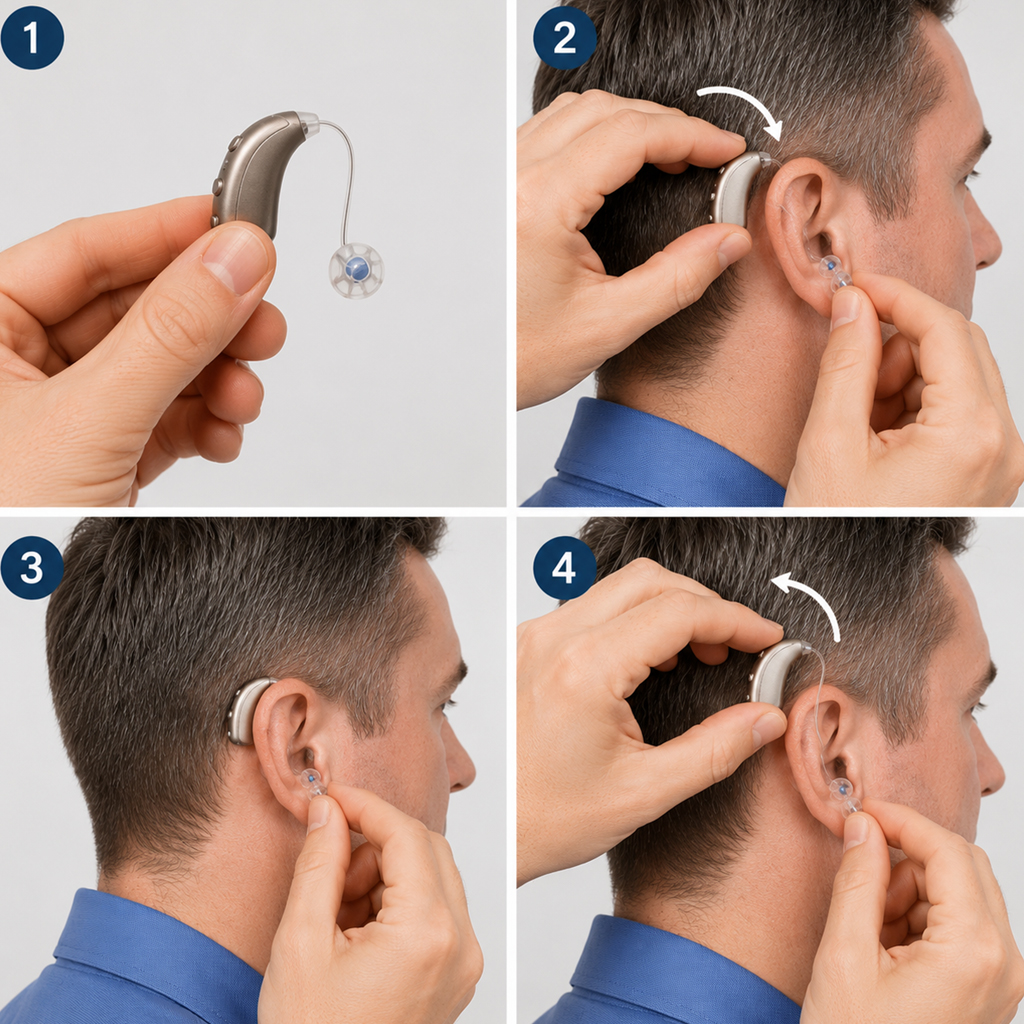
How to Put On and Take Off a Hearing Aid
A hearing aid is used every day, so it is important to learn how to put it on and take it off correctly. Careful handling helps prevent damage to the device, ensures comfortable wear, and reduces the risk of malfunctions. A few simple habits will help extend the lifespan of your hearing aid and keep it working reliably.
Why It Is Important to Handle a Hearing Aid Correctly
Modern hearing aids contain miniature electronic components that require careful handling. Inserting or removing the device too quickly or roughly may damage the housing, sound tube, earmold, or other parts of the hearing aid.
Improper insertion may also cause discomfort, feedback (whistling), reduced sound quality, or an insecure fit in the ear.
How to Properly Put On a Hearing Aid
Before using your hearing aid, make sure it is clean, in good working condition, and ready for use. If your device uses disposable batteries, check that the battery compartment is fully closed. For rechargeable hearing aids, make sure the battery has enough charge for the day.
Follow these simple steps when putting on your hearing aid:
- Wash and dry your hands thoroughly.
- Make sure the earmold or dome is clean.
- Insert the hearing aid gently without applying excessive pressure.
- Do not pull on the tubing or other delicate parts.
- After insertion, make sure the device fits comfortably and securely.
For behind-the-ear (BTE) models, place the hearing aid behind your ear first, then carefully insert the earmold or dome into the ear canal. In-the-ear (ITE) and completely-in-canal (CIC) hearing aids are inserted directly into the ear while holding the device by its body.
How to Properly Remove a Hearing Aid
Your hearing aid should also be removed carefully. Do not pull on the sound tube or other small components, as this may damage the device. Hold the hearing aid by its body and gently remove it from your ear.
After removing the hearing aid, inspect it for moisture or dirt and wipe it with a soft, dry cloth if necessary. If you will not be using the device for an extended period, store it in a protective case or hearing aid container away from dust, moisture, and direct sunlight.
Common Mistakes
Even experienced users sometimes make mistakes that can shorten the lifespan of a hearing aid.
The most common mistakes include:
- putting on the hearing aid with wet hands;
- using excessive force when inserting or removing the device;
- storing the hearing aid in humid environments;
- failing to clean the device regularly;
- using the hearing aid with a damaged earmold or tubing.
If your hearing aid starts producing feedback, sounds worse than usual, or becomes uncomfortable to wear, do not attempt to repair it yourself. Instead, contact a hearing care professional for inspection and servicing.
Frequently Asked Questions
Can I put on a hearing aid with wet hands?
No. Your hands should always be clean and completely dry before handling the hearing aid to prevent moisture from entering the device.
Should I remove my hearing aid at night?
Yes. It is recommended to remove your hearing aid before going to bed, clean it if necessary, and store it in a dry place.
What should I do if my hearing aid is difficult to remove?
Do not force it. Gently hold the device by its body and remove it slowly. If this happens regularly, consult a hearing care professional, as the hearing aid or earmold may need adjustment.
Conclusion
Putting on and taking off a hearing aid correctly takes only a few minutes but helps prevent many common problems during everyday use. Careful handling, regular cleaning, and proper storage will maintain sound quality, extend the life of your hearing aid, and ensure comfortable daily use.