

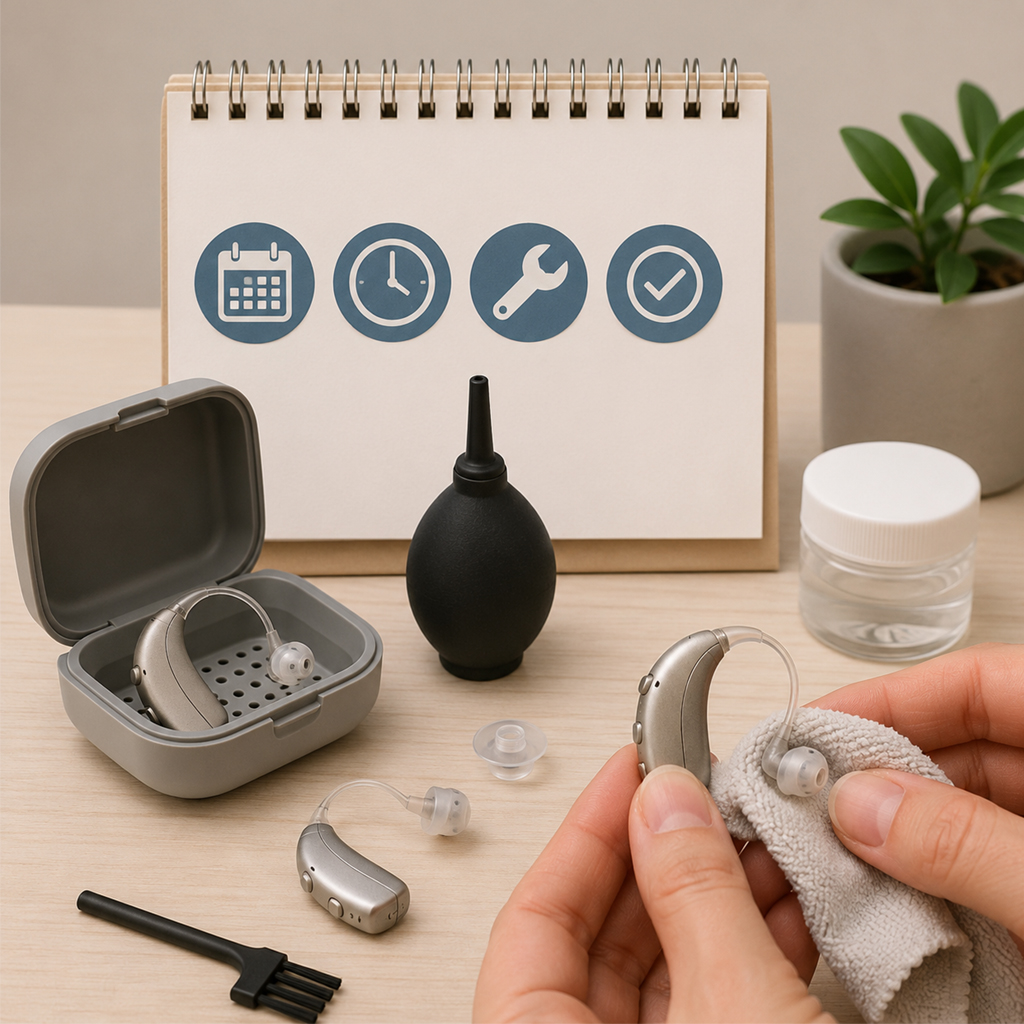
How Often Should a Hearing Aid Be Serviced?
A hearing aid is exposed every day to earwax, moisture, dust, and temperature changes. Even with careful use, dirt and debris gradually accumulate inside the device, which can affect sound quality and the performance of individual components. That is why regular maintenance is an essential part of using any hearing aid.
Many users visit a hearing care professional only after the device develops a problem. However, routine maintenance helps prevent most issues, ensures stable performance, and significantly extends the lifespan of the hearing aid.
Why Regular Hearing Aid Maintenance Is Important
Modern hearing aids contain sensitive microphones, receivers, and electronic components. Earwax, moisture, and dust can reduce volume, cause unwanted noise or feedback, and lead to unstable device performance.
Regular maintenance keeps your hearing aid in good working condition, helps identify worn components in time, and prevents more serious malfunctions.
How Often Should a Hearing Aid Be Serviced?
Some maintenance tasks can be performed at home, but they cannot replace professional servicing. Hearing care specialists recommend combining daily cleaning with regular professional inspections.
Recommended Maintenance Schedule
| Maintenance Task | Recommended Frequency |
|---|---|
| Clean the hearing aid and earmold | Daily |
| Inspect sound openings | 1–2 times per week |
| Replace the battery | As needed |
| Recharge the battery | Daily or as needed |
| Professional inspection and servicing | Every 6–12 months |
| Replace filters, domes, or tubing | As needed or as recommended by a specialist |
Daily cleaning takes only a few minutes but helps prevent dirt buildup. At the same time, it is important not to skip scheduled professional servicing, during which a specialist checks the performance of all hearing aid components and adjusts the device if necessary.
What Is Included in Professional Hearing Aid Maintenance?
Professional servicing includes a comprehensive inspection of the hearing aid. A specialist cleans the device, checks the microphones, receiver, control buttons, battery contacts, and evaluates overall sound quality.
If necessary, the following procedures are performed:
- professional cleaning of the hearing aid;
- testing all device functions;
- replacement of wax filters, domes, or tubing;
- hearing aid adjustment and fine-tuning;
- recommendations for proper care and daily use.
Professional maintenance helps identify potential issues at an early stage and reduces the risk of costly repairs.
When Should You Visit a Hearing Care Center?
You should not always wait until your next scheduled maintenance appointment. If your hearing aid begins to perform differently, it is best to have it checked by a hearing care professional as soon as possible.
Visit a Hearing Care Center if you notice:
- reduced sound quality;
- lower volume than usual;
- feedback or whistling sounds;
- the device turning off unexpectedly;
- rapid battery drain or reduced rechargeable battery life;
- moisture inside the hearing aid;
- physical damage to the device.
Do not attempt to disassemble your hearing aid yourself, as this may cause additional damage.
Frequently Asked Questions
Should I service my hearing aid if it is working properly?
Yes. Preventive maintenance helps detect potential issues before they become serious problems and keeps your hearing aid performing at its best.
Can I perform complete hearing aid maintenance myself?
No. While daily cleaning can be done at home, professional inspection, adjustment, and internal servicing should always be carried out by qualified specialists.
How often should I visit a Hearing Care Center?
In most cases, a professional hearing aid check is recommended every 6–12 months. If your hearing aid is used in demanding conditions or shows signs of malfunction, you should schedule an appointment sooner.
Conclusion
Regular hearing aid maintenance involves more than daily cleaning. Professional inspections help keep the device in excellent working condition, maintain sound quality, extend its lifespan, and prevent many common problems.
Hearing care specialists provide professional diagnostics, adjustments, and maintenance for hearing aids from various manufacturers. Routine check-ups help ensure reliable performance and comfortable hearing every day.