

How to Choose a Hearing Aid for Severe Hearing Loss?
When dealing with severe hearing loss, choosing a hearing aid requires particular attention. The device should provide sufficient amplification, preserve speech intelligibility, and remain comfortable for everyday use.
The most powerful model is not always the best option. When selecting a hearing aid, specialists consider hearing test results, the frequency range, individual sound perception, and the environments in which the person will use the device.
How to Choose a Hearing Aid with Severe Hearing Loss
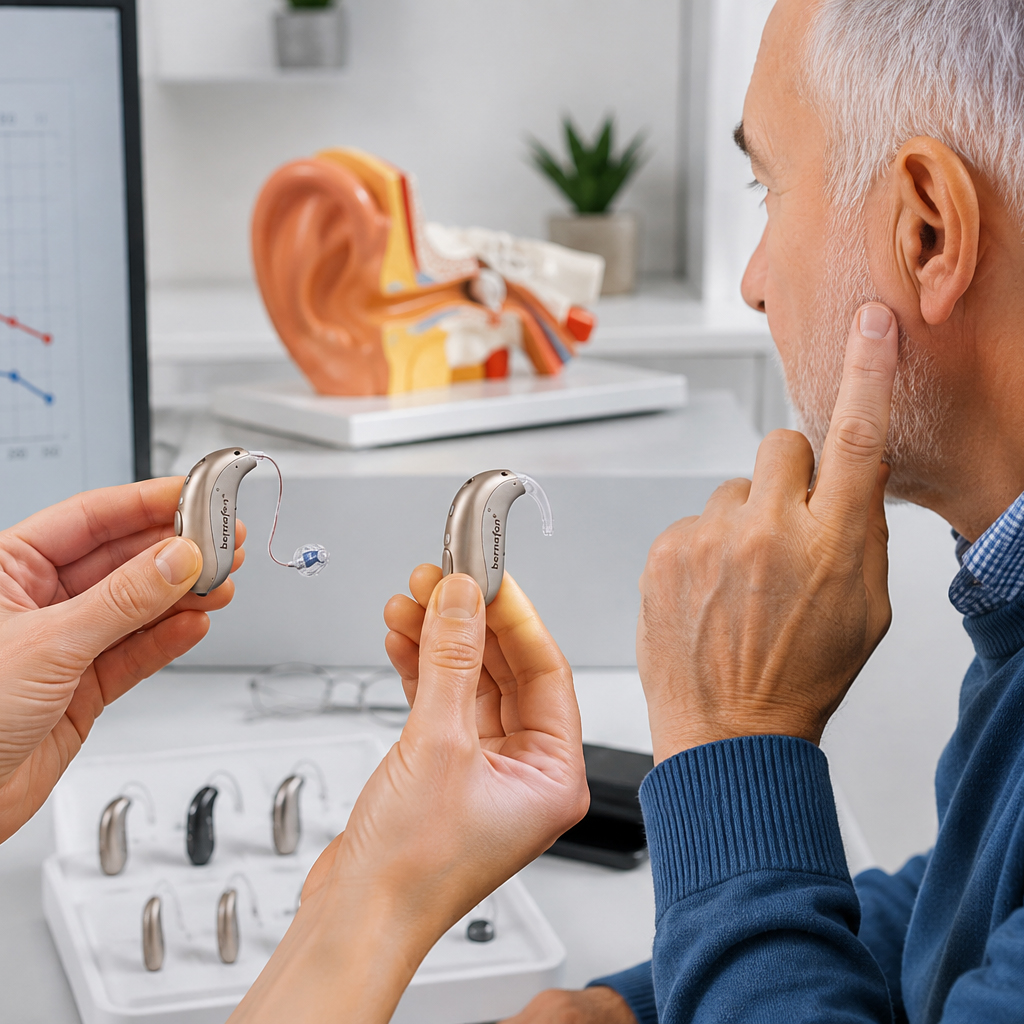
For significant hearing loss, powerful behind-the-ear models are most often considered. They can provide the required level of amplification and are suitable when compact in-the-ear devices no longer provide sufficient results.
The specific model should be selected based on the audiogram and a specialist’s recommendations. You should not choose a device independently based only on the amplification power stated by the manufacturer.
Power and Amplification Range
One of the main characteristics is the maximum amplification level. The hearing aid should provide sufficient volume at the frequencies where hearing loss is most pronounced.
At the same time, excessive amplification is undesirable. It can make sound uncomfortable and does not necessarily improve speech intelligibility. Therefore, amplification power should be selected individually.
Which Features Are Important
In addition to amplification power, people with severe hearing loss should pay attention to sound processing quality. Modern models can automatically adjust amplification parameters depending on the surrounding environment.
The following features can be especially useful:
- sufficient amplification range;
- high-quality speech processing;
- feedback cancellation system;
- multiple programs for different acoustic situations;
- directional microphones;
- individual fitting options;
- Bluetooth and other wireless features when needed.
The number of additional features should not be the main selection criterion. It is much more important that the hearing aid matches the diagnostic results and the user’s actual needs.
Which Types of Hearing Aids Are Suitable
Powerful behind-the-ear hearing aids are most commonly used for severe hearing loss. They have enough space for amplification electronics and can provide a high level of amplification.
Behind-the-Ear Hearing Aids
Behind-the-ear models can be used with thin acoustic tubing, a receiver, or a custom earmold. For significant hearing loss, a specialist may recommend a model with a custom earmold, which provides a more secure fit and helps transmit amplified sound effectively.
The choice of design depends on the degree of hearing loss, the anatomical features of the ear, and the requirements of everyday use.
Why Speech Intelligibility Matters
With severe hearing loss, simply making surrounding sounds louder is not enough. It is important for the user to distinguish speech and understand the words of the person speaking.
Speech Intelligibility
Modern hearing aids use digital signal processing to help enhance speech and reduce the impact of some background noises. However, the result depends on more than the capabilities of the device.
Speech intelligibility is also affected by the condition of the user’s hearing, the surrounding environment, the accuracy of the fitting, and the user’s ability to adapt to amplified sound.
Why Professional Fitting Is Important
Even a powerful and technologically advanced hearing aid will not work optimally without proper fitting. A specialist uses the audiogram as a reference and gradually adjusts amplification parameters for different frequencies.
Individual Fitting
Several adjustments may be needed after the user starts wearing the hearing aid. The user gradually becomes accustomed to new sounds, so the specialist can modify the settings based on the user’s experience and the results of using the device.
With severe hearing loss, it is especially important to monitor hearing regularly and adjust the device parameters when necessary.
| Feature | Why It Matters for Severe Hearing Loss |
|---|---|
| Amplification power | Provides the required level of amplification |
| Frequency range | Allows the characteristics of hearing loss to be taken into account |
| Speech processing | Helps improve speech perception and intelligibility |
| Feedback cancellation | Reduces the likelihood of whistling |
| Individual fitting | Allows the hearing aid to be adapted to the audiogram results |
| Directional microphones | May help improve speech perception in noisy environments |
Frequently Asked Questions
Which hearing aid is best for severe hearing loss?
Powerful behind-the-ear models are most often considered, but the specific hearing aid should be selected individually after a hearing test and audiogram.
Do I need the most powerful hearing aid?
Not necessarily. The hearing aid should have sufficient amplification headroom, but excessive power alone does not make a device more suitable. The important factor is whether its specifications match the specific degree of hearing loss.
Can I choose a hearing aid on my own?
It is recommended to select a hearing aid with the help of a specialist. They can evaluate the audiogram, determine the required amplification power, and perform an individual fitting.
Can a hearing aid be used with very severe hearing loss?
In many cases, hearing aids can improve the perception of sounds and speech. However, the result depends on the degree and type of hearing loss, so the capabilities of a hearing aid should be assessed individually.
Conclusion
With severe hearing loss, it is important to choose a hearing aid not only based on amplification power but also on its ability to provide clear and comfortable speech perception. Powerful behind-the-ear models with a sufficient amplification range and individual fitting options are usually considered.
Before choosing a hearing aid, you should have your hearing tested and consult a specialist. A properly selected and fitted hearing aid can help make the most effective use of residual hearing and make everyday communication more comfortable.