

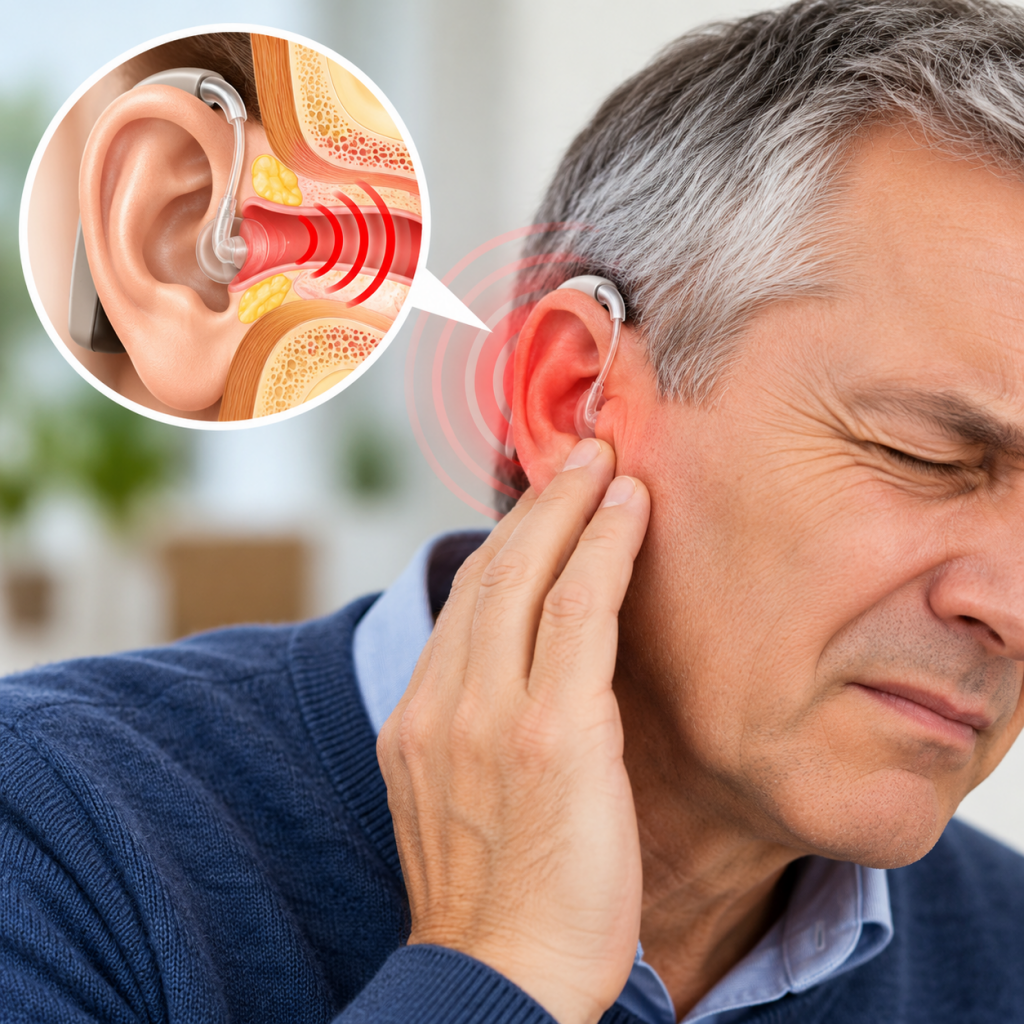
Why does a hearing aid make your ears feel blocked?
A hearing aid can cause a feeling of ear blockage or a plugged ear, especially during the adjustment period. This sensation may be related to a tight fit, the design of the earmold or dome, the occlusion effect, or the device’s amplification settings.
Main Causes of a Feeling of Ear Blockage
A feeling of blockage does not always mean that the hearing aid is physically pressing against the ear. Sometimes a person begins to perceive their own voice, chewing, and other sounds differently, creating the sensation that the ear is blocked.
The most common causes are related to the fit and design of the device, as well as its settings.
The Occlusion Effect and a Feeling of a Plugged Ear
The occlusion effect occurs when the ear canal is partially blocked by an earmold or the body of a hearing aid. As a result, the user’s own voice may sound louder, more resonant, or unusual.
This can be particularly noticeable while speaking, chewing, or swallowing. The brain may gradually adapt to the changed perception.
Incorrect Earmold or Hearing Aid Size
An earmold that is too large or does not fit the shape of the ear properly can create pressure and cause a feeling of blockage. An improper fit can also make the hearing aid uncomfortable to use.
If discomfort appears immediately after inserting the device or becomes stronger with movement, it is worth checking whether it is positioned correctly.
How Hearing Aid Fit Affects the Sensation
The fit directly affects how comfortably a person perceives sound. If the device is positioned incorrectly or blocks the ear canal too tightly, the feeling of blockage may become more noticeable.
| Cause | Possible sensations | What to check |
|---|---|---|
| Tight earmold | Blocked feeling, pressure | Earmold size and fit |
| Occlusion effect | Resonant own voice | How much the ear canal is blocked |
| Incorrect device position | Discomfort, pressure | Device positioning |
| Excessive amplification | Unusually loud sound | Amplification settings |
A Device That Fits Too Tightly
If the hearing aid or earmold blocks the ear canal too tightly, a person may experience physical pressure or a persistent feeling of blockage.
In some cases, the problem can be resolved by adjusting the fit or modifying the earmold design. The shape of the earmold should not be changed independently.
The Effect of a Vent
Some hearing aid designs use a vent that allows partial pressure equalization and can reduce the occlusion effect.
The need for and size of the vent depend on the specific hearing aid, earmold, and the user’s hearing characteristics.
Can Ear Blockage Be Related to the Device Settings?
Yes. The sensation can depend not only on the physical fit but also on the amplification settings. If sounds are perceived as too loud or unusual, this can increase the feeling of discomfort.
Excessive Sound Amplification
When the amplification level is too high, environmental sounds and the user’s own voice may sound unusual. As a result, the user may feel as though their ear is blocked.
If the problem appeared after changing the settings or getting a new hearing aid, it is worth discussing it with a specialist.
What to Do If a Hearing Aid Makes Your Ears Feel Blocked
First, check whether the hearing aid is positioned correctly and whether the earmold is creating physical pressure. It is also important to pay attention to how your own voice sounds.
If the feeling of blockage gradually decreases, it may be part of the adjustment period. However, if the discomfort is significant or persistent, its cause should be determined.
Do not disassemble the device or change its settings yourself.
When to See a Specialist
It is advisable to see a specialist if the feeling of blockage persists for a long time, becomes stronger, or is accompanied by pain and significant discomfort.
A check is especially important if:
- the hearing aid puts significant pressure on the ear;
- your own voice remains too loud or sounds unusually resonant;
- sounds become uncomfortable to perceive after inserting the device;
- changing the position of the hearing aid does not help;
- the discomfort remains even after the adjustment period.
When a Hearing Aid Needs to Be Reprogrammed
If the device fits comfortably but the feeling of blockage does not go away, a specialist can check the hearing aid settings. If necessary, the amplification level and other parameters can be adjusted.
If unpleasant sensations remain even after removing the hearing aid, the cause may not be directly related to the device. In this case, it is advisable to see a doctor to assess the condition of the ear.
Frequently Asked Questions
Can a hearing aid actually make your ear feel blocked?
Yes. This sensation can occur because of a tight fit, partial blockage of the ear canal, or the occlusion effect.
Why does my own voice sound resonant with a hearing aid?
When the ear canal is blocked, the perception of your own voice changes. This is typical of the occlusion effect.
Will the feeling of blockage go away after I get used to the hearing aid?
For some users, the sensation gradually decreases as they adapt. If it persists or causes significant discomfort, the fit and settings of the device should be checked.
What should I do if the hearing aid puts too much pressure on my ear?
The fit and size of the earmold should be checked. If the pressure persists, a specialist can adjust the fit or recommend a different type of earmold.
Conclusion
A hearing aid can cause a feeling of ear blockage because of the occlusion effect, a tight fit, the design of the earmold, or the device settings. During the adjustment period, these sensations may gradually decrease.
If the discomfort persists, becomes stronger, or is accompanied by physical pressure or pain, it is best to have the hearing aid’s fit and settings checked by a specialist.