

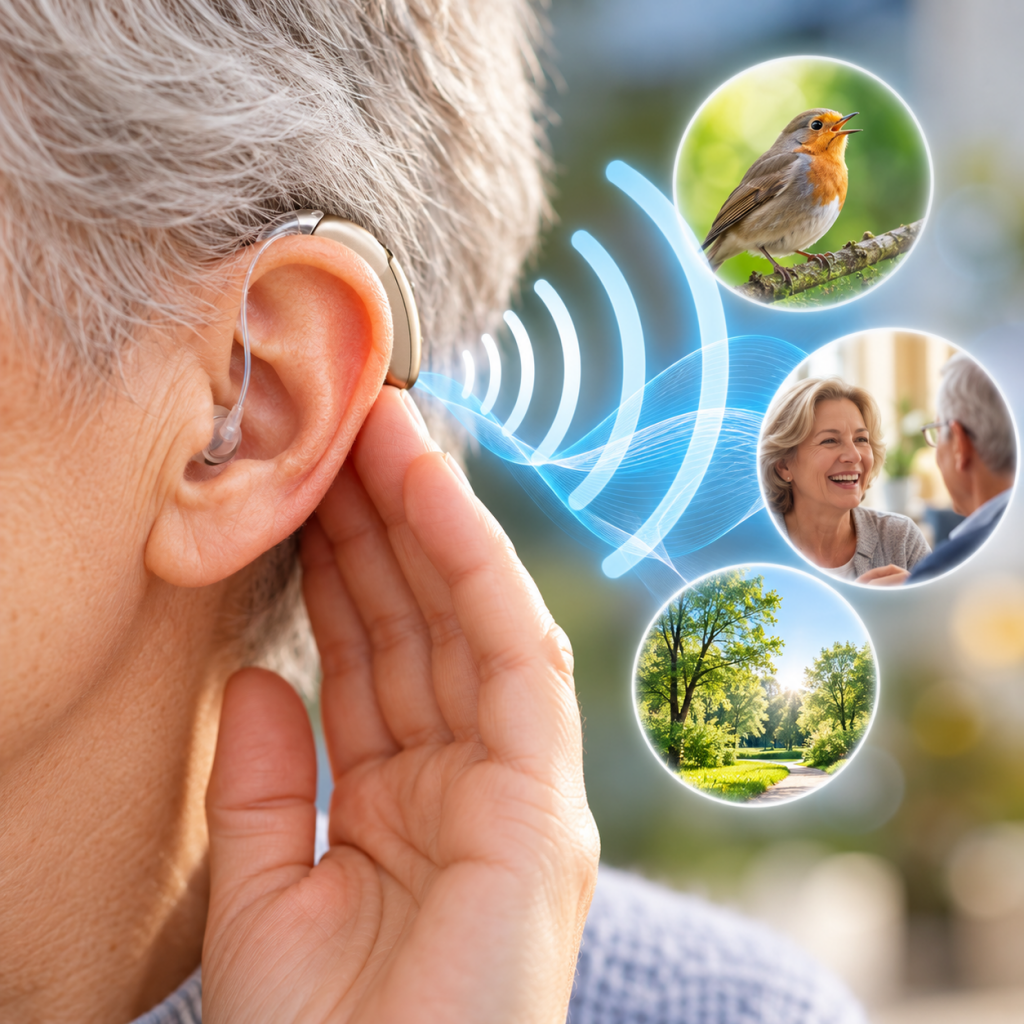
How can I improve the sound quality of a hearing aid?
The sound quality of a hearing aid depends not only on the device itself, but also on its settings, fit, condition, and the conditions in which it is used. If the sound has become too loud, too quiet, distorted, or speech is not perceived clearly enough, it is important to determine the cause and address it.
What Affects the Sound Quality of a Hearing Aid
Several factors can affect how sound is perceived. Even a properly selected hearing aid may sound uncomfortable if it is fitted incorrectly, is dirty, or requires adjustment of its settings.
First of all, it is important to pay attention to:
- the fit of the hearing aid;
- the condition of the microphones and sound outlet;
- the amplification level;
- the way speech is processed;
- the presence of background noise;
- the adaptation period to the device.
If the sound quality changes suddenly, especially after a long period of normal use, it is worth checking the condition of the hearing aid itself.
How Hearing Aid Settings Affect Sound Quality
The settings determine how strongly sound is amplified and in which frequency ranges. Therefore, incorrectly selected parameters can make the sound too loud, harsh, or, conversely, insufficiently clear.
Individual fitting is performed taking into account the user’s hearing characteristics. If hearing changes or discomfort occurs, the device settings may also need to be adjusted.
Proper Hearing Aid Fit
The position of the device in the ear affects not only comfort but also how sound is perceived. If the earmold or dome is fitted incorrectly, sound may be perceived differently, and sometimes a feeling of ear fullness or acoustic feedback may occur.
Therefore, before changing the settings, make sure that the hearing aid is positioned correctly and held securely in the ear.
Cleaning the Device and Sound Outlet
A buildup of earwax, dust, or other debris can impair sound transmission. It is especially important to monitor the condition of the sound outlet, protective elements, and microphones.
Regular cleaning helps maintain proper operation of the device. However, water or unsuitable cleaning products should not be used.
How to Improve the Perception of Speech and Environmental Sounds
Good sound quality is not only about sufficient volume. It is important that speech remains clear and that environmental sounds are not perceived as excessively sharp or unpleasant.
Adjusting the Amplification Level
If the sound seems too loud, harsh, or unnatural, the cause may be an unsuitable amplification level. In such a situation, simply increasing or decreasing the volume does not always solve the problem.
The settings should take into account the user’s hearing characteristics and the specific conditions in which the hearing aid is used.
Getting Used to the Sound
After starting to use a new hearing aid, environmental sounds may be perceived differently. Speech, the noise of household appliances, outdoor sounds, and the user’s own voice may become more noticeable.
The brain needs time to adapt to the changed amount of auditory information. Therefore, during the first days or weeks, the sound may seem unfamiliar.
What to Check When Sound Quality Deteriorates
If the hearing aid has started to sound worse, first check its condition and fit. Sometimes the cause is quite simple and is related to contamination or incorrect positioning of the device.
| Possible Cause | How It May Manifest | What to Check |
|---|---|---|
| Contamination | The sound has become quieter or less clear | Sound outlet, filter, microphones |
| Incorrect fit | Sound perception has changed, discomfort has appeared | Position of the hearing aid and earmold |
| High amplification | The sound seems too loud or harsh | Amplification settings |
| Background noise | Speech has become less clear | Programs and sound processing settings |
| Hearing changes | The usual settings are no longer suitable | A repeat hearing test |
How a Hearing Aid Works in Noisy Environments
In noisy environments, the demands on sound processing become higher. A conversation may be accompanied by traffic noise, other people’s voices, household appliances, and other sources of noise.
Modern hearing aids can use noise reduction and directional signal processing technologies. However, the effectiveness of these features depends on the specific model and its settings.
When Professional Help Is Needed
If the sound quality has not improved after cleaning and checking the fit, a professional examination may be necessary.
It is especially important to consult a specialist if:
- the sound has suddenly become significantly worse;
- speech has become unclear;
- the hearing aid has started to sound too loud or too quiet;
- unwanted noises, whistling, or hissing have appeared;
- the usual settings no longer provide comfortable sound.
Readjusting the Device
If the hearing aid is functioning properly but the sound remains uncomfortable, a specialist can check its settings and adjust the amplification parameters if necessary.
Sometimes the problem is not related to a device malfunction but to a change in hearing or the need to adapt the settings to new conditions of use.
Frequently Asked Questions
Why has my hearing aid started to sound worse?
The cause may be contamination, an incorrect fit, changed settings, or changes in hearing. If simple cleaning does not help, the device should be checked by a specialist.
How can I make the sound in my hearing aid clearer?
It is important to check the fit of the device, the condition of the sound outlet, and the amplification settings. If necessary, a specialist can adjust the speech processing parameters.
Can getting used to the device affect sound perception?
Yes. After starting to use a new hearing aid, the brain needs time to adapt to the changed sound of the surrounding environment.
What should I do if my hearing aid is too loud?
You should not significantly change the settings yourself. It is better to have the amplification parameters checked by a specialist and adjusted if necessary.
Conclusion
To improve the sound of a hearing aid, it is important to consider not only the device settings, but also its fit, cleanliness, the condition of the sound outlet, and the user’s hearing characteristics.
If the sound remains uncomfortable after cleaning and correctly positioning the device, readjustment may be necessary. Properly selected settings help make speech clearer and the perception of environmental sounds more natural and comfortable.